The Student Spaceflight Experiments Program is proud to report that there were a total of XX proposals submitted from student teams across the 20 communities participating in Mission 21 to ISS. Of those, XX proposals were forwarded for review by Step 1 Review Boards in each of the communities. Each Step 1 Review Board selected up to three finalist proposals, which were submitted to the National SSEP Step 2 Review Board.
On December 2, 3 and 11, 2025 the Step 2 Review Board met via Zoom, reviewed the 56 finalist proposals, and selected one proposed experiment to fly from each of the 20 communities, for a total of 20 flight experiments. By December 19, 2025, the National Center for Earth and Space Science Education and the Arthur C. Clarke Institute for Space Education formally notified each community of their selected flight experiments.
It is noteworthy that the XX proposals received reflected a total of XX grade 5-16 students fully engaged in experiment design.
All 56 finalist experiment teams, along with descriptions of their proposed flight experiments, are provided below. You are also invited to meet the SSEP Step 2 Review Board members for Mission 21 to ISS.
Congratulations to the over XX students and their teachers participating in Student Spaceflight Experiments Program Mission 21 to the International Space Station.
Quickly Scroll to Individual Communities
- Edmonton, Alberta, Canada
- Mississippi Mills, Ontario, Canada
- Mesa, Arizona
- Phoenix, Arizona
- Glendora, California
- Pasadena, California
- Colorado Springs, Colorado
- Melbourne, Florida
- Orlando, Florida
- St. Petersburg, Florida
- Tampa, Florida
- New Orleans, Louisiana
- Lowell, Massachusetts
- Omaha, Nebraska
- Albany, New York
- Asheville, North Carolina
- Athens, Ohio
- Pittsburgh, Pennsylvania – CCAC
- San Antonio, Texas
- iForward-Grantsburg, Wisconsin
1. Edmonton, Alberta, Canada
Jump to Edmonton’s Community Profile
SELECTED FOR FLIGHT:
How Does Microgravity Affect the Oxidation of Copper in a Vinegar, Salt, Baking Soda, and Water Solution?
Grade 9, Parkview School, Edmonton Public Schools
Co-Principal Investigators: London Canterbury, Olivia Yu-Zhu
Investigators: Julian Brown, Joella Huang
Teacher Facilitator: Morgan McKinnon
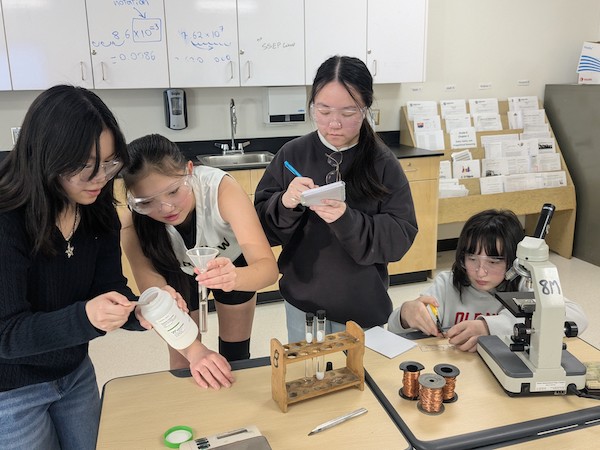
Student Researchers Joella Huang, London Canterbury, Olivia Yu-Zhu and Julia Brown (L to R) conducting experiment optimization trials.
Proposal Summary:
The experiment will test the effects of copper oxidation in microgravity using a mixtureof vinegar, baking soda, water and salt to accelerate the process of oxidation. A piece of copperwill be soaked within the solution, resulting in a form of oxidation (most likely patina). Weeks later, the piece of copper will be analyzed to determine how microgravity may have affected the growth, color, and texture of the patina. The copper wire within the mini-laboratory sent into orbit will be compared with the copper wire on Earth. This experiment is useful because many things in modern society use copper, especially in electrical conductivity and device construction. The goal for this experiment is to test the reliability of copper after a layer(s) of patina has developed, in terms of its strength and conductivity. Conducting this experiment will not only provide new insight of strength and conductivity for copper on Earth, but will also contribute to space machinery and electrical currents used in orbit, should any spacecraft in the near future consist more of copper than now. Advancements in orbit are slowly rising in demand, and knowing more strengths and weaknesses of certain materials allows for a better understanding of what should be used.
HONORABLE MENTION FINALISTS:
To what extent does microencapsulated acetylsalicylic acid (aspirin) keep its effectiveness following exposure to microgravity?
Grade 9, Parkview School, Edmonton Public Schools
Principal Investigator: Madalyn Cullen
Investigators: Hannah Chen, Nicole Liu
Teacher Facilitator: Morgan McKinnon
Proposal Summary:
The goal of this experiment is to see the effects that microgravity has on microencapsulated acetylsalicylic acid (aspirin), a commonly used drug that relieves pain, and reduces fevers or inflammation. This experiment will involve different variables such as temperature, humidity, and exposure to light. By conducting a titration test (with ethanol as the base solvent and sodium hydroxide as the titrant) in order to determine the purity or concentration of the acetylsalicylic acid. Through these tests, a complete and thorough understanding of the overall impact microgravity has on the efficiency of microencapsulated drugs such as aspirin can be obtained. Knowing the possible effects will allow for astronauts to accurately take doses of medication that fit their needs, also leading to further studies on proper storage in space to maintain the drug’s full use and provide insight into other possible effects of drugs after prolonged exposure to microgravity. This allows for improved long term space flights, providing astronauts with a secured, dependable space and allowing for comfort and reassurance through flights. Whether humans decide to expand on expeditions in space, this drug will assist in the mitigation of the discomfort in the human bodies.
The Effect of Microgravity on the Body Development During Metamorphosis in the Seven-Spotted Ladybug
Grade 8, John D. Bracco School, Edmonton Public Schools
C0-Principal Investigators: Katelyn Chimko, Eman Khowaja
Investigators: Eliana Mehari, Kashvi Batra
Teacher Facilitator: Patrica Richards
Proposal Summary:
The aim of this experiment is to investigate ladybug metamorphosis in microgravity, with specific attention to physiological development during the pupa to adult stage. Ladybugs are a biological control as they act as natural pesticides. This makes them a very important species to agricultural industries because they can help reduce the use of chemical pesticides which are harmful to animals, humans, and ecosystems. If the ladybug can complete metamorphosis successfully to the point of survival and reproduction, it will allow for future experiments, which can result in ladybugs being able to aid in agriculture in space. Providing adequate food and water are crucial for the success of this experiment, however we predict there will be a sufficient amount of oxygen for the ladybug’s duration of metamorphosis but potentially not enough for the ladybug to come back to earth alive. Ladybugs use gravity to gain a sense of direction during metamorphosis.
2. Mississippi Mills, Ontario, Canada
Jump to Mississippi Mills’ Community Profile
SELECTED FOR FLIGHT:
Would broccoli sprout faster in low gravity?
Grade 6, R. Tait McKenzie Public School, Upper Canada District School Board
Principal Investigator: Ellie McBride
Investigator: Ollie St.Louis
Teacher Facilitator: Laura Costello
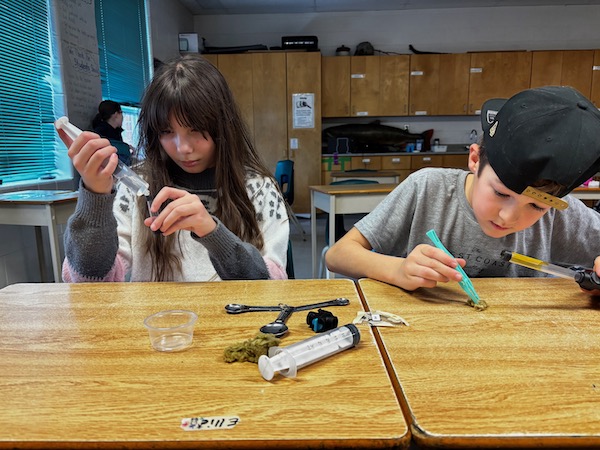
Ellie McBride and Ollie St.Louis carefully prepare their broccoli seed experiment. Their experiment,”Will Broccoli Seeds Sprout Faster In Low Gravity” will represent Mississippi Mills, Ontario, Canada on the ISS.
Proposal Summary:
The purpose of the experiment is to determine if a broccoli seed (Brassica oleracea var. Italica) seed will sprout faster in low gravity. Conducting the experiment in low gravity and on Earth will help us understand if gravity plays a role in seed germination. This research is important because if scientists do not research the characteristics of seed they would have no idea how to grow it or understand the conditions for germination. It is also important because if we do not have the research, we cannot complete the experiment. Broccoli seeds will be helpful on the International Space Station because it has a short germination rate. A short germination rate is important because if a seed has a short germination rate, it will sprout faster, and produce more food and seeds. Broccoli is a good seed to grow because it is a nutrient dense vegetable.
HONORABLE MENTION FINALISTS:
Strawberries vs space: Can strawberry seeds grow in microgravity?
Grades 4-5, R. Tait McKenzie Public School, Upper Canada District School Board
Principal Investigator: Marshal Jones
Investigators: Wilder Billington, Jad Houchaimi
Teacher Facilitator: Keeley McGregor
Proposal Summary:
The purpose of the experiment is to find out if strawberry seeds (Fragaria x Ananassa) can germinate in microgravity. Conducting this experiment both in space with a microgravity environment and on Earth will help us understand and compare how long it takes strawberry seeds to germinate. It would give them strawberries that have lots of vitamin C and antioxidants which will give them healthy food. The strawberries will also help them be able to have longer space missions. Strawberry seeds would be helpful on the ISS because they only take 1-2 weeks to germinate on Earth. With a short growth rate, astronauts don’t have to wait long in space for fresh fruit to grow. Strawberries are an excellent source of vitamins, minerals, fiber, and antioxidants which would allow them to stay longer in space and stay healthy. Strawberries would be a sweet snack for the ISS. The investigation will use a mini lab with two clamps, with fresh water in the first section, Strawberry seeds in the second section, and a fixative in the third section.
Sprouting Chia Seeds In Space!
Grade 6, R. Tait McKenzie Public School, Upper Canada District School Board
Principal Investigator: Declan Craig
Investigator: O.L.
Teacher Facilitator: Laura Costello
Proposal Summary:
The purpose of the experiment is to find out if gravity will affect a chia seed (salvia hispanica). The other purpose of the experiment is to find out if gravity will affect a chia seed. Water might be suspended in microgravity and might not allow the seed to soak up the water like it does on Earth. Conducting the experiment in a microgravity environment and on Earth at the same time helps us understand how water moves through the chia seeds. Also, conducting the experiment in low gravity and on Earth will also help us understand how gravity affects plants in space and Earth.
3. Mesa, Arizona
Jump to Mesa’s Community Profile
SELECTED FOR FLIGHT:
Parkinson’s in Orbit: Microgravity’s Impact on Alpha Synuclein Aggregation
Grade 10, Red Mountain High School, Mesa Public Schools
Co-Principal Investigators: Jaida Funicello, Alexa Gerson, Kennedi Wyman
Teacher Facilitator: Nicole Gomez
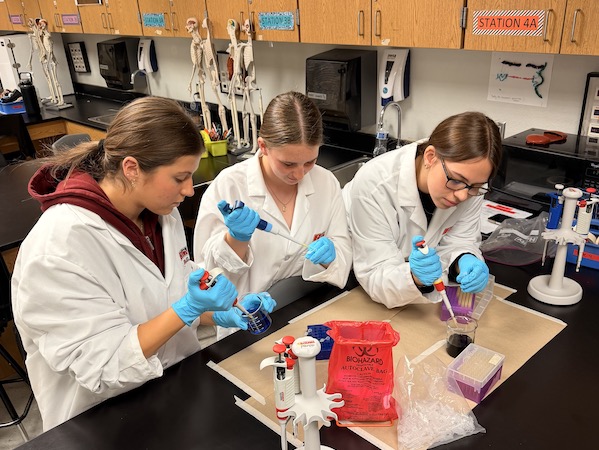
Kennedi Wyman, Riley Farrel, and Mikayla Mellow performing a Western blot to confirm Parkinson’s Alpha-Synuclein’s molecular weight for pre-flight trials.
Proposal Summary:
Parkinson’s disease (PD) is a progressive neurodegenerative disorder diagnosed primarily through neurological examination. The disease is characterized by motor impairments such as tremors and balance difficulties, which significantly hinder an individual’s ability to function and live independently. These symptoms, particularly gait and balance disturbances, have a profound impact on quality of life. Affecting an estimated 10 million people worldwide, Parkinson’s disease remains one of the most challenging and life-altering neurological disorders. This research project aims to investigate how microgravity influences alpha-synuclein aggregation and cell development associated with Parkinson’s disease. Alpha-synuclein is a neuronal protein that, when misfolded and aggregated, forms toxic inclusions contributing to neuronal dysfunction and cell death– key features of PD pathology. By studying the behavior of alphasynuclein in microgravity, the experiment will uncover how environmental conditions affect disease mechanisms at the molecular level. Conducting this experiment is vital to advancing the understanding of Parkinson’s disease and exploring innovative approaches to treatment. The results may reveal new insights into the progression of PD and identify potential therapeutic targets. Ultimately, this research seeks to contribute to the global effort to better the burden of Parkinson’s disease and improve the lives of those affected by this devastating disorder.
HONORABLE MENTION FINALIST:
Microgravity Effects on Cisplatin–DNA Adduct Formation: A Cell-Free Proxy for Chemotherapy Effectiveness in Lung Adenocarcinoma
Grade 10, Red Mountain High School, Mesa Public Schools
C0-Principal Investigators: Alexandrea Smith, Angela Sapra, Mailia Tauveli, Sareen Smith, Emma Keesecker
Teacher Facilitator: Keeley McGregor
Proposal Summary:
As of 2025, lung cancer is the leading cause of worldwide cancer prevalence and mortality, accounting for 2,041,910 new cancer cases and 618,120 cancer deaths within the United States alone. Lung cancer has increased greatly amongst young women aged 50 and below, with an 82% higher incident rate compared to their male counterparts, as well as an exponential rise among those who have never smoked, with non-smokers now accounting for 25% of all lung cancer diagnoses. The non-small cell lung cancer (NSCLC) Adenocarcinoma accounts for 40% of lung cancer fatalities. However, the use of chemotherapies on Adenocarcinoma is typically a non-mixture yet, a combination of Cisplatin and Paclitaxel proposes promising results. The analysis of a Cisplatin and Paclitaxel mixture (CPM) in microgravity may provide evidence of a more effective chemo treatment, causing a decrease in Adenocarcinoma fatalities, and improved treatment, posing fewer side effects. For the purpose of the experiment, two groups will be prepared: one will be introduced to microgravity, and the other will serve as a control with continued exposure to Earth’s gravity. The experiments will test the effects of microgravity on the speed at which the CPM affects Calf-thymus DNA strands. Upon its return to Earth, DNA from both groups will be observed under a microscope to determine the number of Pt-DNA adducts formed. As a result of the effect that microgravity has on the CPM’s interaction with Calf-thymus DNA, new forms of chemotherapy treatments can ensue in those suffering from lung cancer.
4. Phoenix, Arizona
Jump to Phoenix’s Community Profile
SELECTED FOR FLIGHT:
The Effect of Microgravity on the Growth and Structure of Covalent Organic Frameworks (COFs)
Grades 9-10, Paradise Valley High School, Paradise Valley Unified School District
Co-Principal Investigators: Vedika Kashyap, Victor Gomez
Investigators: Kyle Vo, Nikhil Karandikar, Sukrant Vaddi
Teacher Facilitator: Michelle Landreville
Proposal Summary: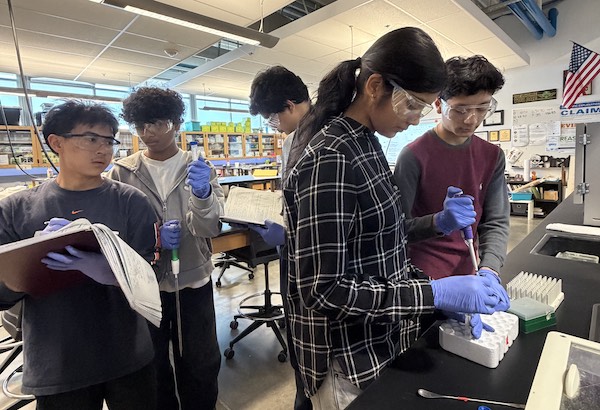
This investigation will test whether microgravity improves the crystal/domain quality and functional performance of a water-grown covalent organic framework (COF), which is a porous crystalline material whose internal architecture can be tailored for separations and purification. COFs often present issues in their structure, such as irregular porosity and irregular crystalline structures, negatively impacting their functions. This experiment utilizes COF-LZU1 (a type of two-dimensional COF) by condensing an aldehyde and an amine building block in an aqueous solution with a mild acid catalyst at room temperature. The investigation will activate growth in microgravity and then stabilize the product for return. A matched Earth sample will isolate the microgravity effect. This proposal and experiment are motivated by the widespread utility of porous crystalline materials for separation and purification. If the environment of microgravity enables fewer defects and larger, more uniform domains, the same chemistry could yield COFs with improved flow and performance, directly relevant to air and water systems on both spacecraft and Earth. The investigation pre-registers these success criteria: detect characteristic COF reflections and imine linkages and evaluate how properties of the COF compare to the ground experiment within statistical confidence.The result will help define how microgravity influences aqueous imine-COF manufacturing and inform future materials development for spacecraft life support, terrestrial applications, and medical/biomedical applications.
HONORABLE MENTION FINALISTS:
Fibrin Clot Architecture in Microgravity: Will Spaceflight Weaken How We Stop Bleeding?
Grades 10-12, Paradise Valley High School, Paradise Valley Unified School District
Principal Investigator: Nikhil Puttamraju
Investigators: Pranav Vippagunta, Ashton Antilla, Aarav Shandilya, Anagha Vippagunta
Teacher Facilitators: Michelle Landreville, Bhawna Verma, Amanda Cherry
Proposal Summary:
Blood clotting is an essential biological and metabolic process that prevents excessive bleeding after injury through the formation of fibers which prevents further expulsion of blood. On Earth, fibrinogen (a soluble protein) is converted to fibrin by thrombin and calcium ions, forming a web-like network that stabilizes a clot. In microgravity, where normal sedimentation and convection are absent, the ability for fiber assembly to occur may change, potentially weakening clot strength. This study aims to understand how fibrin clots change in space and microgravity conditions using a Type 3 Fluids Mixing Enclosure (FME). The FME contains three compartments: purified fibrinogen suspended in sterile sheep blood, a thrombin and calcium chloride mixture, and a chemical fixative to preserve the sample prior to re-entry. We aim to compare the space-grown clots with ground controls, measuring differences in fiber thickness, pore size, and branching, signs of clot architecture and formation patterns. This experiment leads to a better understanding of microgravity’s effects on fibrin structure, serving as a critical milestone in emergency space medicine. The outcome will assist scientists in designing safer medical systems for astronauts, improving surgical planning, and explaining irregular hemostasis patterns found in long-duration missions to the Moon, Mars, and beyond.
The Effect of Microgravity on Poly(urethane-urea)
Grade 12, Paradise Valley High School, Paradise Valley Unified School District
Co-Principal Investigators: Aritro Chatterjee, Liam Whelan
Investigators: Zach Kelso, Evan Webster, Aariya Udhayasankar
Teacher Facilitators: Reeni Samuel, Bhawna Verma
Proposal Summary:
This experiment investigates how microgravity affects the mechanical properties, defined as maximum tensile strength and breaking strain, and self-healing efficiency, defined as the percentage of pre-healing mechanical properties recovered, of the polymer poly(urethane-urea), a material known for its autonomous healing via dynamic hindered urea bonds (HUBs) and urea/urethane H-bonds at room temperature. On Earth, gravity-driven convection and sedimentation influence molecular diffusion and polymer chain alignment during curing and healing, but these effects are absent in microgravity. The study aims to determine whether this absence enhances or weakens the polymer’s healing rate and mechanical strength. Two identical polymer samples will be sent to the International Space Station (ISS) and put into contact under controlled crew interactions, with a ground control performed under identical conditions. After returning, both samples will undergo durability testing and microscopy analysis to assess healing quality. The results of this analysis will help evaluate the suitability of this class of self-healing polymers for future use in space suits, habitat walls, and equipment casings where autonomous repair is essential for mission safety and longevity. They will also determine the influence of convection and sedimentation on the healing process, informing future development of selfhealing polymers for space applications. To our knowledge, this will be the first direct investigation of dynamic HUB-based self-healing polymers in microgravity.
5. Glendora, California
Jump to Glendora’s Community Profile
SELECTED FOR FLIGHT:
Lactobacillus Rhamnosus Growth
Grades 9-12, Glendora High School, Glendora Unified School District
Co-Principal Investigators: Kiana Tajiki, Borongting Wu, Katherine Vin, Carrie Rao
Teacher Facilitator: Rana El Yousef
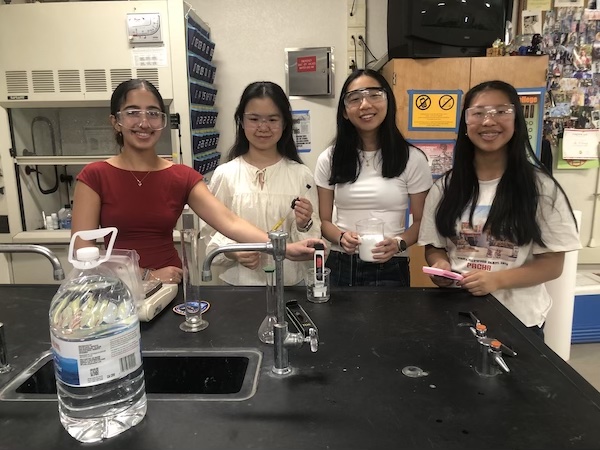
L to R: Kiana Tajiki, Borongting Wu, Katherine Vin, and Carrie Rao working on their experiment with Lactobacillus.
Proposal Summary:
Lactobacillus rhamnosus, a probiotic, is a beneficial bacterium, often used alongside antibiotics to aid digestive health. The goal of this investigation is to examine the effects of microgravity on the growth of Lactobacillus rhamnosus. Lactobacillus rhamnosus is hypothesized to grow faster under microgravity conditions compared to Earth’s conditions. The results from this experiment will further the development of closed-loop life support systems. Temperature and humidity are looked at to determine whether they have an effect on the growth of the bacterium. In essence, the objective of this investigation is to determine whether gravitational force is a factor in affecting the growth of Lactobacillus rhamnosus.
HONORABLE MENTION FINALISTS:
Microgravity’s Effects on HEWL Protein Crystallization
Grade 10, Glendora High School, Glendora Unified School District
Principal Investigator: Aden Campos-King
Investigators: Edward Lin, William Huang, Yusen Li
Teacher Facilitator: Rana El Yousef
Proposal Summary:
This investigation explores the effects of a microgravity environment on protein crystallization using N-acetylmuramide glycanhydrolase, or Hen Egg-White Lysozyme (HEWL), and an Ammonium Sulfate solution. HEWL remains the principal model system for studying the thermodynamics and kinetics of protein crystallization, easily forming high-quality crystals due to its inherent stability and low-entropy surface features, making it ideal for a controlled structural study aboard the ISS. By isolating the crystallization process in space, this experiment aims to eliminate the gravitational phenomena of sedimentation and convection, which cause internal crystal defects and high mosaic spread on Earth, and prevent the ultra-high resolution required for advanced applications. Understanding the optimization of crystal growth in microgravity is crucial, as the development of modern therapeutics and biopharmaceutical medicines increasingly relies on precise protein structures for designing pharmacotherapy via Structure-Based Drug Design (SBDD). Comparing the crystal quality and internal defect rate with those seen in Earth-based controls will allow for the analysis of the specific structural impacts of microgravity, validating the efficiency of diffusion-limited growth. Findings would establish a benchmark for the near-perfectly-formed protein crystals and provide a critical protocol directly applicable to complex, difficult-to-crystallize drug targets, accelerating development of SBDD and the next generation of targeted treatments.
Microgravity and Radiation Effects on the Adhesive Properties of Mussel Adhesive Protein (MAP) Secreted by Mytilus edulis
Grade 10, Glendora High School, Glendora Unified School District
Principal Investigator: Shalena Prakash
Investigators: Samyuktha Parvatini, Jonathan Siby, Serena Sun
Teacher Facilitator: Rana El Yousef
Proposal Summary:
There is an unmet need for a durable and versatile adhesive for space missions, one that is effective for wound closure in astronauts and for the construction and repair of metallic spacecraft and robotic systems. Future missions to aqueous celestial bodies such as Europa, Enceladus, and moon regions containing ice may also benefit from adhesives capable of functioning effectively in wet or submerged environments. This project aims to evaluate the performance of mussel adhesive proteins (MAPs) from the species Mytilus edulis under conditions of microgravity and elevated radiation aboard the International Space Station (ISS). MAPs are known for their exceptional bonding capabilities in aquatic environments, adhering strongly to both inorganic and organic surfaces. This robust surface bonding is primarily contributed by 3,4-dihydroxyphenylalanine (DOPA), a unique amino acid that enables rapid, durable bonding even in conditions where conventional adhesives fail. A primary focus of this study will be to investigate the effects of microgravity and cosmic radiation on DOPA oxidation, the key biochemical process behind MAP adhesion. Understanding how these factors influence adhesive performance in space will provide insight into the design of next-generation bioinspired adhesives for use in extraterrestrial environments. Anticipated outcomes of this research include the development of multifunctional adhesives suitable for spacecraft and robotic repair, in-situ construction, and maintenance operations in dry or wet space environments. Additionally, due to their biocompatibility and rapid bonding properties, MAP-based adhesives offer critical medical applications (wound closure and tissue repair) in microgravity, ultimately enhancing astronaut health and safety during prolonged missions.
6. Pasadena, California
Jump to Pasadena’s Community Profile
SELECTED FOR FLIGHT:
The Effect of Microgravity on the Crystallogenesis of Hen Egg White Lysozyme
Grades 13-15, Pasadena City Community College/AT3
Co-Principal Investigators: Abel Garcia Xelhua, Andrew Fox, Bryan David, Jared Smolinski, Raia Robotham, Syeda Akther
Teacher Facilitator: Jared Ashcroft
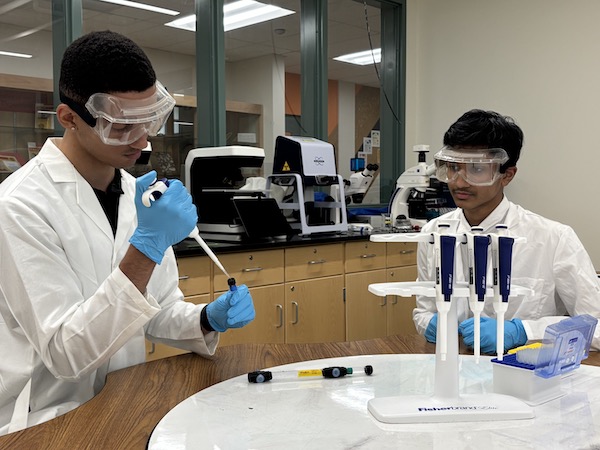
Bryan testing Rhodium tube with glutaraldehyde and salt solutions.
Proposal Summary:
The proposed spaceflight experiment will investigate how microgravity will affect the crystallization of the model protein Hen Egg White Lysozyme (HEWL). High-quality protein crystals are essential for determining the three-dimensional atomic structure of proteins, a cornerstone of modern structure-based drug design. On Earth, gravity-driven phenomena such as convection and sedimentation disrupt the formation of crystal lattices, limiting both crystal size and quality. In this experiment, a purified HEWL solution will be mixed with a buffer. After a defined growth period, a chemical fixative will be introduced to preserve the crystals for postflight analysis. The primary objective is to qualitatively evaluate whether crystals grown in the diffusiondominated microgravity environment of the ISS show improved size, morphological perfection, and internal order (mosaicity) compared to those grown in a 1 g ground control. It is anticipated that crystals grown in microgravity will exhibit superior structural integrity and internal order. Such results would provide high-fidelity validation of the SSEP mini-laboratory platform for crystallographica investigations and further support the scientific value of microgravity to advance protein crystallization along with pharmaceutical development on Earth.
HONORABLE MENTION FINALISTS:
Comparative Capture of E. coli by Antimicrobial-Peptide Biosensors in Microgravity
Grades 14-15, California State Polytechnic University, Pomona
Co-Principal Investigators: Elizabeth Osborn, Frank Puga-Raya, Steven Picazo, Jesus Coca
Investigators: Alejandro Lopez, Damian Palacios-Rosas, Maya Ramirez
Teacher Facilitator: Michael Pham
Proposal Summary:
This investigation tests how microgravity affects the initial attachment between antimicrobialpeptide (AMP) coated surfaces and bacteria using an Enzyme-Linked Immunosorbent Assay (ELISA) to quantify bacteria captured. Understanding how microgravity alters this capture process can inform the design of biosensors and surface coatings for spacecrafts, where persistent biofilm formation threatens crew health and equipment reliability. On Earth, gravity affects how bacteria reach surfaces through sedimentation, buoyant convection, and diffusion. In orbit, sedimentation and buoyancy vanish, leaving only molecular diffusion with active bacteria swimming to move cells toward surfaces. This change in transport physics may reduce bacterial capture rates compared with ground conditions. If microgravity alters attachment rates to AMP-coated surfaces, future spacecraft biosensors will require new designs to maintain reliable performance in orbit. The investigation will test this hypothesis by comparing bacterial capture by AMP-coated surfaces under microgravity and normal-gravity conditions. Identical sample sets will be exposed
for equal durations in flight and on Earth and a post-flight on-coupon sandwich ELISA will quantify the number of E. coli cells specifically bound to the immobilized AMPs via electrostatic and hydrophobic membrane interactions, using enzyme-linked antibodies to detect the captured bacteria. Differences between flight and ground results will reveal whether reduced gravity alters the efficiency or extent of AMP-mediated capture. Findings will clarify how physical transport processes shape the earliest stages of microbial colonization in space and will guide the development of improved antimicrobial coatings for long-duration missions and planetary exploration
Inorganic Bone Growth under Microgravity Conditions with use of Hydroxyapatite Crystal Formation
Grades 13-14, Pasadena City College
Principal Investigator: Yazhen Shi
Investigators: Bryan Martinez, Katherine Thu-Ling Tseng
Teacher Facilitator: Jared Ashcroft
Proposal Summary:
Bone loss is a critical issue for astronauts during long-duration spaceflight, where the absence of gravity accelerates calcium loss and bone resorption. Previous studies aboard the ISS have shown that microgravity alters osteoblast function and disrupts the nucleation of hydroxyapatite. However, few experiments have directly examined the mineral-level crystal formation process of calcium phosphate under microgravity. With this proposed experiment, microgravity experiment by Lundager Madsen and current advances on formations of calcium phosphate crystals with controlled size and shape, may heavily contribute to knowledge in this subject. The experiment will be conducted aboard the International Space Station (ISS) using a RhFET-01 Mini-Lab. The first chamber will contain a calcium-ion (Ca²⁺) solution, while the third chamber will hold ethanol for reaction termination. The central chamber, serving as the primary reaction zone, contains a glass tube array designed to mimic the collagen framework of
natural bone and is embedded within a gelatin matrix. Under microgravity conditions, Ca²⁺ ions will diffuse into the central chamber and react with phosphate to form flocculent or colloidal calcium phosphate precipitates (Ca₃(PO₄)₂). These 2 precipitates will be allowed to develop into hydroxyapatite for approximately four weeks under microgravity conditions. After the samples return to Earth, the precipitates will be filtered and dried, after which their crystalline structure, morphology, and density will be analyzed using microscopy and diffraction-based characterization techniques. This research aims to provide insight into astronaut bone health, biomaterial engineering, fracture medication, and physical therapy treatments on Earth.
7. Colorado Springs, Colorado
Jump to Colorado Springs’ Community Profile
SELECTED FOR FLIGHT:
Space Climate Seeds: Investigating Osmotic Stress-Primed Germination in Microgravity
Grades 13-15, University of Colorado at Colorado Springs (UCCS) and Pikes Peak State College (PPSC)
Co-Principal Investigators: Daniel Elmore, Max Pehrson
Investigators: Anthony Januskiewiecz, Jake Johnson, Samantha Rithchie
Teacher Facilitator: Emily Mooney, PhD
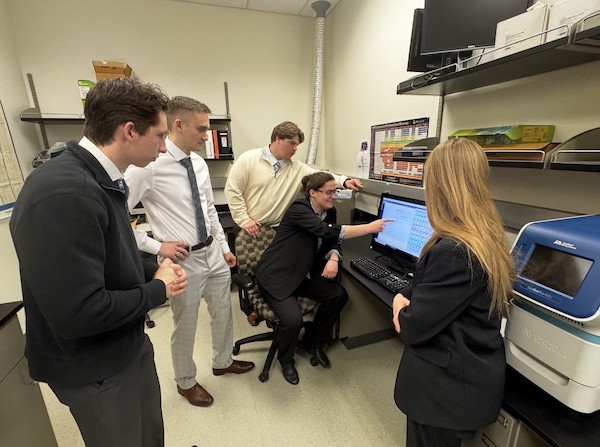
The team reviews the operation of a quantitative PCR (qPCR) system at the BioFrontiers Laboratory to familiarize themselves with analytical workflows relevant to the experiment.
Proposal Summary:
The Space Climate Seeds investigation explores whether microgravity can molecularly train crop seeds to withstand extraterrestrial stress. The study examines early germination and stressresponse activation in wheat (Triticum aestivum) and soybean (Glycine max), two nutritionally complementary crops vital for closed life-support systems. By combining short-duration exposure to microgravity with a controlled osmotic challenge, the experiment tests whether the absence of gravity primes seeds to express molecular defense pathways that enhance resilience. Seeds transported to the International Space Station will undergo activation and a 72-hour germination period in orbit, followed by in-orbit termination using RNAlater to preserve RNA integrity. Identical 1 g ground controls conducted on Earth using the same Rhodium Fluid Experiment Tube (RhFET-01) hardware will verify gravity-dependent molecular changes. Post-flight analysis will quantify RNA purity and stress-gene expression using a UV/VIS microplate spectrophotometer and gel electrophoresis in Dr. Mooney’s laboratory, with real-time quantitative PCR performed on the Step One Plus Real-Time PCR System (Applied Biosystems) located in the UCCS Bio Frontiers Center. These arrangements ensure complete analytical capability and scientific rigor within existing academic resources. Results will determine whether microgravity functions as a biological conditioning factor that strengthens cellular preparedness for harsh environments. Findings will advance NASA’s Biological and Physical Sciences Division objective to develop resilient crop systems for the Artemis Program and future Mars missions, supporting the long-term vision of reliable food production beyond Earth.
HONORABLE MENTION FINALISTS:
Duckweed (Wolffiella) Survival and Ecological Function in Microgravity Under Ambient Light
Grades 13-15, University of Colorado at Colorado Springs (UCCS) and Pikes Peak State College (PPSC)
Principal Investigator: Beckett Miller
Investigators: Mario Flores, Jozlyn Jorgenson, Tyler Lincoln
Teacher Facilitator: Amy Klocko
Proposal Summary:
The proposed flight experiment aims to investigate microgravity effects on duckweed (Wolffiella) survival and growth in a controlled environment aboard the ISS (International Space Station). The primary objective of this experiment is to determine whether the duckweed has the ability to survive and function in both ambient light and microgravity conditions by comparing the
size, structure, and physiological responses. By observing these effects, the experiment will assess whether duckweed can continue to grow, produce oxygen, and purify water in space under these conditions. In microgravity, duckweed is expected to exhibit non-directional growth patterns, giving it the potential to grow in multiple directions rather than only atop water as on Earth. Duckweed’s ability to form dense floating colonies in still water [1] makes it extremely fitting for microgravity experimentation. Its compact size allows for efficient cultivation in small test tubes, which is compatible with the spatial limitations of the ISS experiment. This growth characteristic ensures an effective use of limited space and resources, aligning with the constraints of microgravity research. Additionally, duckweed has a beneficial impact on water quality. It aids in purifying water by absorbing harmful excess nutrients such as nitrogen, which are commonly introduced from agricultural runoff and wastewater discharge [2]. Furthermore, it absorbs metals, which can accumulate in aquatic environments [3]. By removing these pollutants, duckweed prevents harmful algal blooms and improves water quality [2]. By testing duckweed’s survival and ecological functions in microgravity, the experiment could help development of sustainable, closed-loop life-support systems for future space missions.
Quantifying Optical Clarity and Crystal Properties of Microgravity-Grown Ammonium Dihydrogen Phosphate (ADP) Crystals
Grades 13-16, University of Colorado at Colorado Springs (UCCS) and Pikes Peak State College (PPSC)
Principal Investigator: Alexander Grimm
Investigators: Nicholas Jacobs, Reese Combs, Sarah Mallard, Larry Lara
Teacher Facilitator: Dr. Stephen Budy
Proposal Summary:
The research will study the optical quality difference between samples synthesized on Earth and in microgravity conditions for ammonium dihydrogen phosphate (ADP). This will be performed by quantitatively comparing each sample’s transparency, crystal properties, and structural morphology. ADP is a nonlinear optical (NLO) crystal that proves to be a highly versatile crystal
that holds great significance in modern applications within the fields of electronic engineering, optics, and photonics. On Earth, uneven ion transport and gravity-driven convection can lead to the introduction of structural lattice defects, which reduce transparency and thus degrade optical performance. Conducting the experiment in microgravity will minimize these effects, allowing
the investigation to assess differences in the performance of molecular-diffusion-dominant crystal samples compared to convection-dominated crystal samples. The experiment will utilize the Rhodium Fluid Experiment Tube (RhFET-01) in a Type 3 configuration. This configuration will allow controlled activation and stabilization of the crystallization process. An unsaturated solution of ADP will be combined with ADP powder to initiate crystal growth. Following crystal growth, a dyed saturated stop solution will be introduced to preserve crystal growth on return to Earth, dyeing any growth done outside of microgravity. Once returned to Earth, post-flight tests will include light-transmission measurements, laser scatter, and microscopic imaging to analyze clarity, growth uniformity, and defect density. By comparison of crystal samples grown in microgravity and 1-g environments, this study will quantify how microgravity influences optical performance, with results advancing the understanding of crystallization physics and aiding in the development of future space and ground-based instrumentation.
8. Melbourne, Florida
Jump to Melbourne’s Community Profile
SELECTED FOR FLIGHT:
Effects of Microgravity on Neurodegeneration using Tauopathy Model
Grades 14-15, Florida Institute of Technology
Co-Principal Investigators: Cordelia Case, Kayla Conklin, Alexis Hopper, Jessica Watkins
Teacher Facilitator: Dr. Andrew G. Palmer
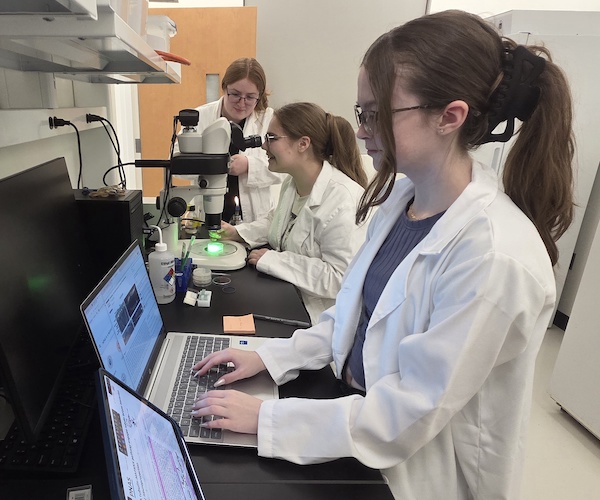
The Florida Tech team is observing and analyzing the movements of the nematode C. elegans. The team will launch and hatch this model worm system into space to learn more the effects of gravity on neurodegenerative disorders.
Proposal Summary:
As the duration of space travel begins rapidly lengthening due to technological advances, it becomes essential for the field of space medicine to understand the physiological effects of microgravity on neurological dysfunction. While neurodegenerative diseases are widely studied and established to be influenced by genetic factors, their pathophysiologies are not fully understood. Although microgravity has been found to alter gene expression, including in genes affecting neuromuscular degeneration, its effects on tau-related neurodegeneration have not yet been investigated. This proposal researches whether microgravity accelerates or mitigates the rate of neurodegeneration in the Caenorhabditis elegans (C. elegans) tauopathy model. Tau (tubulin-associated unit) is a microtubule-associated protein implicit in neuronal degradation. It is essential in maintaining neurological function and stabilizing microtubule networks. Abnormal tau aggregation disrupts microtubule integrity and axonal transport, leading to neuronal degradation. Tauopathy-related diseases, such as Alzheimer’s, are characterized by this aggregation of tau. C. elegans serve as a valuable model in neurogenetic research in space due to genetic manipulability, brood size, short lifespan, and well-characterized neurological physiology. Tauopathy is researched in C. elegans by transgenetically inserting the human MAPT gene. By comparing wild-type and tauopathy strain C. elegans in microgravity to their genetically identical cohorts raised on Earth, it is possible to determine whether microgravity accelerates or mediates tau-associated neurodegeneration. Results will address the aforementioned gap in research by identifying the interaction between tau pathology and microgravity, providing essential insight for developing neuroprotective strategies in space and advancing fundamental understanding of neurodegeneration.
HONORABLE MENTION FINALISTS:
How Does Microgravity Affect Protein Degradation in Metabolism?
Grade 16, Florida Institute of Technology
Co-Principal Investigators: Kaden Block, Brooke Mortillo, Olivia Weaver
Collaborator: Conner Cadenhead
Teacher Facilitator: Dr. Andrew G. Palmer
Proposal Summary:
Many astronauts who spend prolonged time in space return to Earth and experience a myriad of health issues, including metabolic problems. The goal of this experiment is to study the effects of microgravity on metabolic processes, particularly amino acid synthesis. The bacteria Clostridium sporogenes, a microbe that can be found in the human gut, is capable of catabolizing the amino acid Tryptophan. The bacteria’s metabolism of this amino acid will be monitored and data will be collected from both an on-ground and an in-flight experiment. Tryptophan will be studied in this experiment because of the importance of the metabolites it can be converted to, all of which can heavily impact human health. Impacts include intestinal and digestive problems, impaired muscle development, and neurological effects. The data from this experiment will be used to compare how microgravity affects the net production of the target metabolites. At the end of the experiment a comparison of the results will show if gravity affects the rate of synthesis and degradation of Tryptophan, thus proving whether or not microgravity affects metabolism, and potentially, to what extent it affects metabolism.
PRISMAA: Prebiotic RNA Inclusion Study in Microgravity for Asteroidal Analogs
Grades 15-16, Florida Institute of Technology
Co-Principal Investigators: Allona A. Yehiav, Emilio J. Lugo
Teacher Facilitators: Dr. Andrew G. Palmer, Dr. Armando Azua Bustos
Proposal Summary:
For millennia, humanity has pondered the origins of life on Earth. While biogenesis explains life emerging from non-living matter, astrobiological theories propose that early biomolecules may have extraterrestrial origins. Among these, the panspermia hypothesis suggests that biomolecules could be delivered to Earth via celestial bodies such as asteroids. Sodium chloride (NaCl) crystals, or halite, found on asteroids like Bennu, are of particular interest due to their ability to form fluid inclusions, which are microscopic pockets of liquid trapped during crystallization. On Earth, these inclusions are known to encapsulate and preserve biomolecules, shielding them from environmental damage, including radiation. As ribozymes (catalytic RNA molecules) are thought to be one of the main molecules involved in the first metabolism related to the origin of life on Earth, this experiment investigates whether similar encapsulation of ribozymes can occur in microgravity, potentially allowing these ribozymes to survive interplanetary travel. A fluorescently tagged sTRSV hairpin ribozyme will be combined with a buffer and NaCl in a Rhodium Fluid Experiment Tube aboard the ISS, with ground control for comparison. Post-flight analysis will assess crystal structure and RNA encapsulation using epifluorescence microscopy, mass spectrometry, and electron microscopy. This research contributes to understanding both the panspermia hypothesis and the RNA world theory, which posits RNA as a precursor to DNA-based life due to its simpler synthesis requirements. If fluid inclusions can form and preserve RNA in microgravity, it would support the idea that complex RNA molecules could have been delivered to Earth via asteroids, offering new insights into the
chemical processes that may have instigated life.
9. Orlando, Florida
Jump to Orlando’s Community Profile
SELECTED FOR FLIGHT:
A Kidney Stone in Microgravity — Examining Physical and Chemical Properties of Calcium Crystals Formed in Microgravity
Grades 14 and 16, University of Central Florida
Co-Principal Investigators: Andrei Nesterenko, Sammi Jones. Reese Laushot
Teacher Facilitators: Dr. Philip Metzger, Dr. Amy Gregory
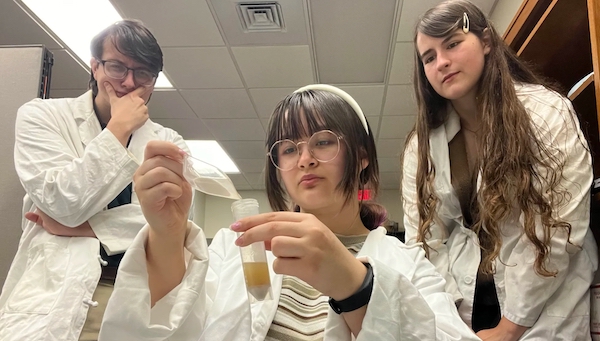
UCF students (Andrei Nesterenko, Sammi Jones, and Reese Laushot) examine fluid components in their research on kidney stone formation.
Proposal Summary:
This investigation will examine how microgravity affects the formation and properties of calcium-based crystals, a process relevant to kidney stone development in astronauts. Calcium crystallization is influenced by gravity-driven processes on Earth, including sedimentation and convection, which shape crystal size, geometry, and internal structure. In the absence of gravity,
these processes are minimized, potentially producing crystals with different physical and chemical characteristics. Understanding these differences is critical, as kidney stones pose increased health risks in space due to altered calcium metabolism and bone demineralization. The investigation will compare crystal growth in microgravity with identical conditions on Earth, allowing the effects of gravity to be isolated. The study will focus on key characteristics of the crystals, including their shape, size distribution, structural integrity, and chemical composition. By analyzing these properties, the investigation aims to determine whether microgravity alters the formation of denser, more uniform, or mechanically distinct crystals. Such insights may provide
information about the likelihood of stone formation, potential complications, and the effectiveness of treatment approaches such as fragmentation. This research offers a controlled, straightforward approach to understanding how altered gravitational conditions influence crystal formation. The outcomes are expected to advance knowledge of both fundamental crystallization processes and applied space medicine. Findings could inform strategies to mitigate kidney stone risk during long-duration spaceflight and enhance understanding of crystal growth in environments where gravity is absent or significantly reduced.
HONORABLE MENTION FINALISTS:
Gelatin in Microgravity: Bridging Molecular Food Science and Hospitality
Grades Undergraduate, University of Central Florida
Principal Investigator: Jaida Smith
Investigator: Olivia Bergler
Teacher Facilitators: Chef Cesar Rivera-Cruzado, Dr. Amy Gregory, Dr. Phil Metzgar
Proposal Summary:
The absence of gravity in space presents a unique environment for studying hydrocolloid gelation and food texture formation. This investigation explores how microgravity affects the gelation rate, structural formation, and syneresis of gelatin, a foundational ingredient in culinary science and a promising medium for space food innovation. On Earth, gravity influences heat transfer, convection, and sedimentation during gelation, shaping texture and consistency. In contrast, microgravity eliminates these forces, allowing gel formation to proceed through molecular diffusion and thermal equilibration alone. By comparing gelatin samples formed in orbit to those formed under terrestrial gravity, the investigation aims to isolate the role of gravity in hydrocolloid cell network assembly and moisture dynamics. The study will examine how microgravity alters gel structure, clarity, and bubble suspension, key factors in texture development and food presentation. These insights will contribute to the formulation of texture-diverse, emotionally resonant, and operationally efficient food systems for space environments. Gelatin’s versatility supports a range of potential applications in space food systems, including edible packaging, layered desserts, and wellness-focused gels that replicate comforting Earth textures while delivering nutrients efficiently. Its physicochemical properties and adaptability make it a strong candidate for future food technologies in orbit. This experiment bridges food science and hospitality, contributing to the development of sustainable, texture-diverse nutrition strategies for long-duration missions and space tourism. The findings may also offer novel insights for improving food production technologies, positioning gelatin as a model system for understanding texture formation in altered gravitational conditions.
Evaluating Conventional Laundry Detergent for the Removal of Lunar Regolith from Astronaut Clothing
Grades 14 and 16, University of Central Florida
Principal Investigator: Andrei Nesterenko
Investigator: Matt McMenamin
Collaborators: Sammi Jones, Brandon Leon, Sergio Solera Valverde
Teacher Facilitators: Dr. Philip Metzger, Dr. Amy Gregory
Proposal Summary:
Long duration space flights require significant logistical planning for the entirety of the mission, and simple daily activities are not the exception. This investigation will investigate the use of mechanical force, standard detergent, and minimal water to remove excess lunar regolith in a cloth model of indoor astronaut uniforms in microgravity. This is because the normal forces of gravity cannot assist in creating the friction necessary to wash clothes. Regolith is a dangerous lunar sediment that can cause significant damage to the mouth, throat, and lungs when inhaled, making its appropriate removal a must when living in controlled environments such as a future lunar base. The results of this experiment will help improve the safety and quality of life of crew members in future lunar missions.
10. St. Petersburg, Florida
Jump to St. Petersburg’s Community Profile
SELECTED FOR FLIGHT:
The Effect of Microgravity on the Formation and Properties of Calcium Alginate Hydrogels
Grades 13-14, St. Petersburg College
Co-Principal Investigators: Eilya Yazdani, Nicholas Tsongranis, Vinicio Castillo
Teacher Facilitator: Dr. Grace Moore
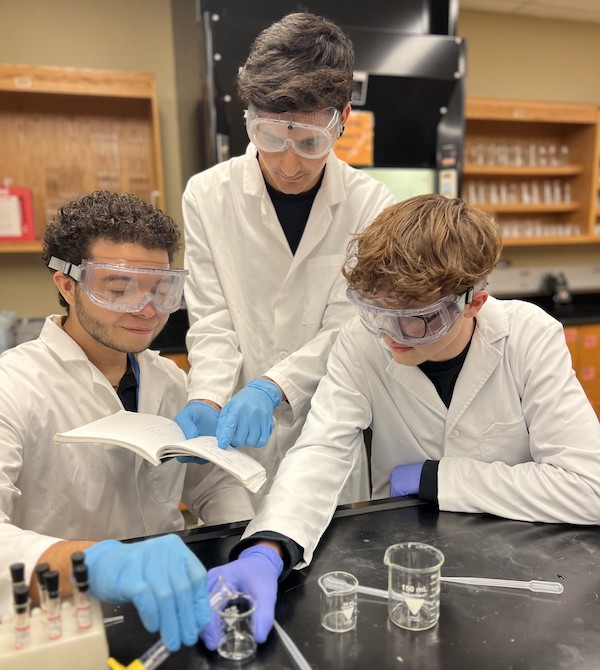
SPC’s flight team conducting preliminary hydrogel research. Pictured L to R: Vinicio Castillo, Eilya Yazdani, and Nicholas Tsongranis.
Proposal Summary:
This experiment investigates how microgravity affects the formation and properties of Calcium Alginate Hydrogels formed from aqueous solutions of Sodium Alginate and Calcium Chloride. Under the influence of Earth’s gravity, Calcium Alginate Hydrogels form due to ion diffusion and convection forces. However, under microgravity, convection forces are greatly reduced, leading to a distinct crosslinking structure and uniformity that potentially yields different material properties. This experiment compares hydrogel’s properties such as density, electrical conductivity, UV radiation shielding, transparency, swelling ratio, water retention, and degradation rate of hydrogel samples formed in microgravity against Earth-based control samples, with gravity being the only variable. Understanding how gravity affects hydrogel’s three-dimensional water-absorbing network and mechanical behavior provides valuable insight into biomedical and engineering applications of hydrogel in both terrestrial and space settings.
HONORABLE MENTION FINALISTS:
Assessing the Viability of Daphnia magna Resting Eggs Post Space Travel and Passive Microgravity Exposure for Implications in Bioregenerative Life Support Systems for Future Space Missions
Grade 15, St. Petersburg College
Co-Principal Investigators: Reese Moore, Summer Gallagher
Teacher Facilitator: Paul G. Cutlip
Proposal Summary:
Daphnia magna are freshwater planktonic crustaceans that remain a hot topic in scientific studies ranging from genomic experiments, wastewater treatment, and ecotoxicology. Their evolutionary adaptations and current applications in biological sciences make them ideal candidates for Bioregenerative Life Support Systems (BLSS) for future space missions. Daphnia resting eggs are adapted to withstand extreme environmental conditions and remain viable for many years and hatch when the proper stimuli is provided. The SSEP Mission 21 mini lab where the experiments on the resting eggs will be conducted, does not provide the light duration (photoperiod) necessary for them to hatch. Therefore, this study investigates Daphnia magnas’ resting egg viability after space travel and microgravity exposure. It is hypothesized that the eggs can return to Earth and hatch given the proper stimuli. If the eggs remain viable after space travel, their potential implications in BLSS include wastewater management, toxicity detection, enhancing hydroponic crops, and increasing food productivity.
How Does a Microgravity Environment Affect the Aggregation of Tau Proteins and the Formation of Neurofibrillary Tangles
Grade Undergraduate, St. Petersburg College
Co-Principal Investigators: Noah A. Von Dauber, Karolina Liskiewicz
Teacher Facilitator: Dr. Joanna D. Maza, DVM
Proposal Summary:
Protein aggregation is the assembly of misfolded proteins in an insoluble complex. Depending on the specific conditions of the aggregation process, those aggregates can be dysfunctional. Dysfunctional aggregates are associated with diseases such as Alzheimer’s, Parkinson’s, and Amyotrophic Lateral Sclerosis. Tau protein is one of the most susceptible proteins to aggregation
and is a key factor in several neurodegenerative diseases. Also tau protein is associated with microtubules, which help maintain the internal structure of neurons. In diseases such as Alzheimer’s, tau becomes hyperphosphorylated and dissociates from microtubules before congealing into toxic masses called neurofibrillary tangles. Although it is well established that these aggregates lead to altered neuronal function and contribute to neurodegeneration, the conditions that promote or discourage aggregation are less clear. This experiment is tailored to investigate the effects of a microgravity environment on the aggregation process of tau protein relative to ground control studies conducted on the Earth’s surface. In space, gravity does not interfere with molecular movement, which may allow proteins to truly assemble on their own. By studying tau protein in this state, knowledge of neurodegenerative diseases will be expanded. This is crucial for the creation of new preventative measures and medications that can stop these diseases before symptoms become too severe. In all, this experiment will explore how physical forces influence the progression of neurodegenerative diseases and provide information for future approaches to prevent or decelerate disease progression. It will also provide insight into the neurological implications of space travel on astronauts.
11. Tampa, Florida
Jump to Tampa’s Community Profile
SELECTED FOR FLIGHT:
Microgravity Effects on Chitosan Hydrogel Structure for Potential Wound-Care Applications
Grades 13, 15 and 16, University of South Florida
Principal Investigator: Krystal Walford
Investigators: Jaiden Brick, Olivia Bruhn, Jade Fei, Hannah Kirschenmann
Teacher Facilitator: Sylvia Thomas
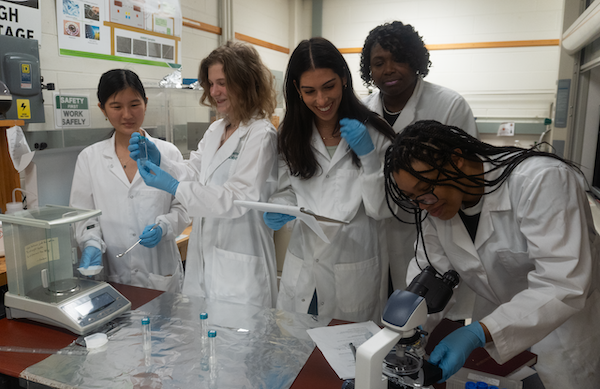
(L-R) Jade Fei, Hannah Kirschenmann, Jaiden Brick, USF Professor Sylvia Thomas, and Krystal Walford weigh samples for their research into hydrogels.
Proposal Summary:
Wound healing presents a critical challenge in spaceflight, where access to conventional medical treatments is limited. Hydrogels are promising wound-care materials because they maintain moisture, protect damaged tissue, and can deliver therapeutic agents directly to the site of injury. Chitosan, a natural biopolymer derived from shellfish and insect exoskeletons, is biodegradable, biocompatible, and exhibits strong antibacterial activity. When cross-linked into a hydrogel network, chitosan forms a soft, adhesive matrix capable of accelerating tissue repair and preventing infection. On Earth, gravity influences how hydrogels settle and cross-link. In microgravity, these same processes may behave differently, potentially changing the gel’s structure, strength, and water-retention ability. The proposed investigation will determine whether the absence of gravity results in a more uniform and stable chitosan hydrogel, which could enhance its performance for medical use. By forming and comparing chitosan hydrogels in microgravity and on Earth, this study aims to identify structural differences that reveal how gravity affects polymer network formation. The results could improve the design of advanced wound-treatment materials for astronauts on long-duration missions and for patients on Earth. Understanding how microgravity alters chitosan hydrogel behavior will also contribute to the broader development of sustainable biomaterials for use in future space medicine and biomedical engineering applications.
HONORABLE MENTION FINALISTS:
Nutritional Retention of Germinating Black Currant Seeds in Microgravity
Grades 16 and Graduate Student, University of South Florida
Principal Investigator: Karam Shahrouri
Investigator: Catalina Montijo-Vindas
Collaborator: Jessica Bains
Teacher Facilitator: Arash Takshi, PhD
Proposal Summary:
The investigation examines how microgravity influences the germination and nutritional development of black currant (Ribes nigrum) seeds. Black currants serve as a valuable model crop due to their high levels of vitamin C, anthocyanins, and other antioxidants that support human health and long-duration spaceflight. By studying this species in orbit, the investigation seeks to determine how key biochemical compounds and nutrient pathways develop in the absence of gravity-driven processes such as sedimentation and convection. The investigation places germinating seeds in a controlled substrate that provides both structural support and moisture retention in microgravity. Researchers will assess how the seedlings develop mineral composition, phenolic content, and antioxidant properties compared to ground-based control under otherwise identical conditions. This comparison will highlight whether microgravity alters the nutritional qualities of the seedlings, providing insights into plant adaptation and resource utilization in space. Understanding how nutrient-rich plants germinate and establish under microgravity contributes directly to future agricultural systems in extraterrestrial environments. Black currants, with their dense nutritional profile, represent an ideal candidate for advancing knowledge of plant growth strategies that sustain astronaut health. The outcomes of this investigation will help define how crops can serve as both food and functional health support in long-duration missions, as well as inform the design of plant agriculture systems for colonization on Mars and beyond.
Dark Adsorption in Space: Testing Cactus-Modified TiO₂ Films Beyond Earth
Grades 13-15, University of South Florida
Co-Principal Investigators: James Ma, Ivan Alexis Martinez Diez-Muro, Riva Nathani
Teacher Facilitator: Norma Alcantar
Proposal Summary:
This study investigates how microgravity affects the interaction between methylene blue dye and titanium dioxide films enhanced with cactus gelling extract (TiO₂–GE). On Earth, laboratory tests have revealed that these bio-enhanced films possess a notable capability: they decompose dye molecules even in the absence of light. This “dark activity” suggests that adsorption and surface
interactions with plant extract play critical roles beyond traditional photocatalysis. The investigation focuses on the earliest stage of photocatalysis—specifically, molecular adsorption on catalyst surfaces. Buoyancy-driven convection on Earth continually regenerates the liquid boundary layer at solid surfaces, thus enhancing the rate at which dye molecules interact with the catalyst. In microgravity, convective currents are absent, leaving molecular transport governed solely by diffusion and capillary forces. This fundamental shift may reduce adsorption rates or modify the distribution of molecules on the film surface, potentially impacting binding capacity. To evaluate these effects, the adsorption and dark-degradation characteristics of TiO₂–GE films are compared between ground controls and samples active in orbit. Distinguishing variations in molecular transport and surface contact under reduced-gravity conditions elucidates the design of photocatalytic devices for water purification in spacecraft and extraterrestrial environments, where fluid dynamics deviate from terrestrial standards. These discoveries enhance the comprehensive understanding of adsorption processes and catalyst behavior pertinent to environmental remediation and energy conversion technologies.
12. New Orleans, Louisiana
Jump to New Orleans’ Community Profile
SELECTED FOR FLIGHT:
Coacervate Protocells in Microgravity: Stability, Function, and Implications for the Origins of Life Beyond Earth
Grades 14-16, Tulane University
Co-Principal Investigators: Noa Aval, Brenden Findlay, Nam Joshua Nguyen
Teacher Facilitator: Noshir Pesika, PhD
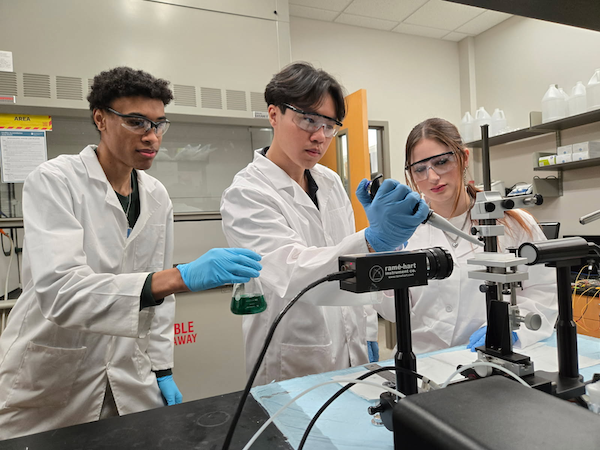
The team prepares to make measurements of the shape of coacervate droplets, which are dense liquid droplets of macromolecules that may have been precursors to cells during early Earth history.
Proposal Summary:
Previous studies suggest that life on Earth may have originated from simple protocells capable of compartmentalizing and supporting primitive biochemical reactions. Coacervates – liquid droplets formed by the phase separation of oppositely charged polymers – are the leading model as they concentrate nucleic acids and proteins, enhance reaction rates, and exhibit growth-like behavior. While extensively studied under Earth’s gravity, the behavior of coacervates in microgravity has never directly been examined. This project will investigate the influence of microgravity on the formation, stability, and function of the coacervate model for protocells. We hypothesize that in microgravity coacervate formation will exhibit reduced coalescence, molecular cargo partitioning will be enhanced, and enzymatic activity within the droplets will be greater when compared to ground controls. By isolating the role of gravity on protocell formation and persistence, the study will provide insight into the plausibility of life beyond Earth and expand current earthly models of early prebiotic evolution. These results not only have implications in astrobiology but also inform the design of self-assembling biomaterials and future space biomanufacturing technologies.
HONORABLE MENTION FINALISTS:
Growth and Morphological Responses of the Filamentous Fungus Aspergillus niger to Microgravity Conditions
Grades 13 and 15-16, Tulane University
Co-Principal Investigators: Kristen Rashelle Webster, Vincent Martin, Yolanda Canabate Garcia
Teacher Facilitator: Dr. Joan W. Bennett
Proposal Summary:
Fungi play a vital role in bio-recycling on Earth by decomposing organic matter and releasing nutrients to enhance soil fertility and serving many other essential functions in global ecology. This investigation will examine how microgravity influences the growth, mycelial structure, and spore production of the common mold species Aspergillus niger. Ten Aspergillus niger cultures will be grown on Malt Extract Agar at 25–30 °C. In preliminary experiments, a minimum of five cultures will be maintained under Earth gravity, and five will be exposed to simulated microgravity conditions using a clinostat that is 3-D printed. Ultimately, we hope to include one replicate of fungal culture flown in space on the International Space Station. After a four- to five-week growth period, samples will be compared for differences in mycelial morphology, pigmentation, filamentation, and spore production using traditional microscopy. Additional analyses, including measuring RNA expression and fungal volatile organic compound (VOC) production, will assess changes in metabolic activity. It is important to analyze and contrast gravitational conditions. This project will help our understanding of fungal adaptability in extraterrestrial environments. Furthermore, it shows possible applications in space-based bio recycling and sustainable crop production. Understanding mycelial and spore production in microgravity, as well as gene expression and volatile emission may help determine whether fungi can serve as to support plant growth in space habitats for long durations and has implications for astronaut health.
Synthesis and properties of a pozzolanic cement made from a lunar regolith simulant and ordinary portland cement in microgravity
Grades 14-16, Tulane University
Principal Investigator: Zack Herbst
Investigator: Charles Goldstein
Collaborators: Luke Wheeler, Sebastian Powers
Teacher Facilitator: Keena Kareem
Proposal Summary:
The proposed project aims to synthesize an aggregate cement (known as a pozzolanic cement) in microgravity, using materials chemically similar to those on the lunar surface. The results will determine the viability of pozzolanic cement as an efficient in situ building material on the lunar surface through a payload mass reduction of nearly 80%. By measuring the effects of microgravity on compressive strength and structure, this project will determine the potential for material to be synthesized on the lunar surface. Typically, a pozzolanic cement consists of a mixture mainly of the energy waste product fly ash (type F fly ash) and a small amount of ordinary Portland cement (OPC). In this project, the fly ash will be replaced by a lunar regolith
simulant of similar chemical composition. A NASA astronaut will conduct the experiment in microgravity in a sealed chamber aboard the International Space Station over a period of 4-6 weeks, while a control experiment is simultaneously conducted in standard Earth gravity. Following synthesis and return to the surface, the mechanical and structural properties of both samples will be analyzed and compared. It is expected that microgravity will increase the compressive strength and structural homogeneity of a pozzolanic gel matrix-based cement.
13. Lowell, Massachusetts
Jump to Lowell’s Community Profile
SELECTED FOR FLIGHT:
Aging and Coarsening of Milk-Protein Micelles
Grade 14, University of Massachusetts Lowell
Co-Principal Investigators: Need permission to post names
Teacher Facilitator: Supriya Chakrabarti
Proposal Summary:
This experiment investigates how microgravity affects the stability and aggregation behavior of milk-protein colloids, focusing on casein micelles that determine the texture and structure of dairy products. On Earth, these micelles gradually separate through creaming and sedimentation due to gravity, which accelerates aggregation and leads to nonuniform textures. In microgravity, those processes are suppressed, allowing the study of how micelles age and coarsen when particle motion is governed only by diffusion and intermolecular forces. A Type 3 Fluids Mixing Enclosure (FME) will be used, with compartments containing a casein suspension, a phosphate buffer to stabilize pH, and an ethanol fixative to halt aggregation. The astronaut will sequentially mix these components to initiate and preserve micelle evolution. Upon return, particle size, turbidity, and texture will be analyzed and compared to ground-based controls. The results will reveal how the absence of gravity alters colloidal aging, providing insights relevant to both soft-matter science and the development of stable dairy-based foods for
future space missions.
HONORABLE MENTION FINALIST:
Effect of Microgravity on Yeast Fermentation and Metabolic Pathway Selection Under Low Oxygen Availability
Grade 13, University of Massachusetts Lowell
Co-Principal Investigators: Need permission to post names
Teacher Facilitator: Supriya Chakrabarti
Proposal Summary:
Yeast (Saccharomyces) switches between two major metabolic pathways depending on oxygen availability: aerobic respiration (high ATP yield, minimal ethanol) and anaerobic fermentation (ethanol and CO₂ production). On Earth, convection and buoyancy-driven gas exchange contribute to oxygen availability and removal of CO₂. In microgravity, gas bubbles do not rise, fluid circulation is reduced, and oxygen distribution becomes diffusion-limited, potentially altering how yeast partitions metabolism between respiration and fermentation. Our experiment uses a Type 3 FME (three chambers). Chamber 1 contains yeast suspended in a sugar solution with known initial dissolved oxygen (DO). Chamber 2 contains a small volume of additional sugar solution to sustain short-term fermentation. Chamber 3 contains fixatives (RNAlater or ethanol 70%) to stop metabolism at a defined timepoint before return. The sample volume is intentionally small to ensure CO₂ production remains below RHFET pressure limits (≤ ~2 psig). Upon return to Earth, ethanol concentration, residual sugar, and cell density will be measured to determine whether microgravity increased fermentation relative to matched 1-g controls. We hypothesize that microgravity will cause yeast to ferment more aggressively due to reduced oxygen distribution, producing higher ethanol concentrations than ground controls.
14. Omaha, Nebraska
Jump to Omaha’s Community Profile
SELECTED FOR FLIGHT:
Neutron Radiation Detection via Bubble Neutron Dosimeter Near Solar Maximum
Grade 14, Metropolitan Community College
Co-Principal Investigators: Eric Tomjack, Nikoli Vanosdall
Collaborator: Alvaro Gonzalez-Cruz
Teacher Facilitator: Kendra Sibbernsen
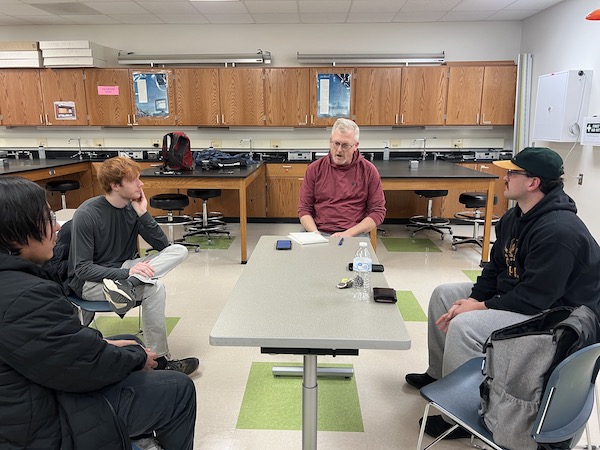
MCC students (Eric Tomjack, Nikoli Vanosdall and Alvaro Gonzalez-Cruz) collaborating on their research of solar neutron dosimeters.
Proposal Summary:
The investigation aims to discover how much neutron radiation is present aboard the International Space Station (ISS) payload area during high solar activity near solar maximum. Higher solar activity could potentially lead to greater exposure of neutron radiation, thus affecting future SSEP missions, astronauts, and equipment aboard. Through the usage of bubble neutron dosimeters, the investigation will collect retainable data during the flight experiment. This data is pertinent to the understanding of the amount of neutron radiation future SSEP missions, astronauts, and equipment are exposed to during an active solar cycle period.
HONORABLE MENTION FINALIST:
Chemical and Radiological Effects of Spaceflight on Injectable Solutions
Grade 14, Metropolitan Community College
Co-Principal Investigators: Tailla Strawn, Ellie Loehr, Brycen Brown
Teacher Facilitator: Michael Sibbernsen
Proposal Summary:
This project will examine whether common aqueous solutions used in injectable drug delivery, specifically Sterile Water, Bacteriostatic Water, and Sodium Chloride, undergo any measurable chemical changes or residual radioactivity after being exposed to microgravity and ionizing radiation during spaceflight. These fluids are essential components of injectable medicines used in healthcare settings. While these solutions are generally stable under normal Earth conditions, it is unknown how long-term
exposure to the space environment may affect their chemistry. Understanding this is critical for the safe administration of medications during extended missions. Samples of each fluid will be placed in separate chambers of a Type 1 Rhodium RhFET-01
Mini-Lab, each containing its respective aqueous solution and chromatography test strips for post-flight analysis. The samples will remain sealed and static during the mission, experiencing natural radiation and microgravity exposure. After the mission, the samples will be compared to ground controls, one shielded from radiation and one unshielded to detect any chemical or radiological differences. This research will contribute to safer and more reliable medical supply management for future long-duration space travel.
How Microgravity Affects the Corrosion of Low-Grade Carbon Steel
Grade Undergraduate, Metropolitan Community College
Co-Principal Investigators: Karrin Ledwich, Mya McBride, Jaden Polley
Teacher Facilitator: Kendra Sibbernsen
Proposal Summary:
The proposed experiment is to investigate how microgravity affects the corrosion of steel wool in water by comparing its rate of corrosion aboard the International Space Station (ISS) with that under Earth’s gravity. Corrosion in water is a fundamental process that can compromise the integrity of metals, and understanding how this process behaves in a microgravity environment is
vital for future space exploration. By examining how steel wool in water behaves under microgravity conditions, this experiment aims to provide insights into material degradation in space. The results could inform the design of more corrosion-resistant materials and protective systems for spacecraft, satellites, and future extraterrestrial habitats, supporting the long-term safety and sustainability of human spaceflight.
15. Albany, New York
Jump to Albany’s Community Profile
SELECTED FOR FLIGHT:
The effects of microgravity on red maple tree seed germination
Grade 8, William S Hackett Middle School, Albany City School District
Co-Principal Investigators: Need permission to post names
Teacher Facilitator: Craig Ascher
Proposal Summary:
This experiment aims to determine whether germinating red maple trees in a microgravity environment is more effective than on Earth. This experiment aims to demonstrate how seeds adapt to new environments. In the long term, this experiment could help with deforestation issues with new and more effective ways to grow trees. The hypothesis for the experiment is that if there is a red maple tree in microgravity and on the ISS, then it will germinate at a faster rate than it would on Earth. On both Earth and on the ISS, there will be 4 red maple tree seeds in one section that will be divided by one clip. In the second section, there will be 3 milliliters of water that will slowly be added whenever the astronauts can interact with it in space. In the third compartment, there will be formalin to stop the growth and preserve it. So once it arrives back, both can be compared
and analyzed. This will help future long-term space missions when astronauts will need to grow their own food and produce oxygen.
HONORABLE MENTION FINALISTs:
Microgravity and its effect on molding blueberries
Grade 8, Stephen and Harriet Myers Middle School, Albany City School District
Co-Principal Investigators: Need permission to post names
Teacher Facilitator: Mrs. Kaufman
Proposal Summary:
This experiment aims to discover if blueberries mold differently in space compared to Earth. This experiment is important because it will revolutionize food being sent to the space station if the experiment succeeds. The experiment will investigate whether 2 dehydrated blueberries can be sent to the International Space Station. Research shows that spacecraft conditions may quicken mold development due to available moisture and oxygen, and that microgravity causes fungi to form denser colonies since spores remain suspended. We will compare blueberries kept on Earth (placed in sunlight to promote mold) with those sent to space, using water and formalin to control mold in orbit. After the space blueberries return, we will compare both sets. This research is important because microgravity can affect fungal growth and the behavior of bacteria, influencing safety for future people sending fruit to the space station. This experiment will hopefully help future experiments and make Mission 21 forever remembered.
The Effect of Microgravity on McDonald’s French Fries in Space
Grade 8, Stephen and Harriet Myers Middle School, Albany City School District
Co-Principal Investigators: Need permission to post names
Teacher Facilitator: Mrs. Kaufman
Proposal Summary:
The goal is to find out whether or not a McDonald’s french fry will mold in space, since it has been said that McDonald’s french fries don’t mold easily. The french fry will be freeze-dried and rehydrated when in space. Then wait a few weeks. After that formalin will be mixed with the fry before it comes down from space to end the experiment while it’s still in space. The same experiment will be conducted on Earth. Three things learned from the official McDonald’s website are that McDonald’s french fries will mold after being added to water/liquid. It was also learned that there is allegedly no preservatives in their fries. And last it was learned is that there also is proof of McDonald’s french fries sitting out for up to years without molding. The hypothesis is a McDonald’s french fry won’t mold whatsoever in space. It would be set up by dehydrating approximately 2.5 grams of French fry, placing it in the tube with clips on either side, and adding 5 milliliters of water to the left area, you need about two
times the weight of the fry of water. It will be shut with clamps. In the right clamped chamber, the same amount of formalin as water would be there. This experiment would be beneficial because it could change what foods could be eaten in space and change the future of food in the ISS. The references for this experiment are CNET, Space Center Huston, and McDonald’s.
16. Asheville, North Carolina
Jump to Asheville’s Community Profile
SELECTED FOR FLIGHT:
How are lubricating oils affected by microgravity?
Grade Undergraduate, Asheville Buncombe Technical Community College
Principal Investigator: Curtis Epley
Investigators: Need permission to post names
Teacher Facilitator: Shannon T. Bonomi
Proposal Summary:
The experiment will involve sending various lubricating oils into a microgravity environment to observe how their properties are affected. A control sample will remain on Earth to serve as a baseline for comparison. The knowledge gained will help determine what lubricating greases are most suitable for flight and sustained operation in microgravity.
HONORABLE MENTION FINALISTS:
Comparative Analysis of Cacti Seedlings Growth and Development on Earth and in Microgravity Environment
Grade Undergraduate, Asheville Buncombe Technical Community College
Co-Principal Investigators: Need permission to post names
Teacher Facilitator: Shannon T. Bonomi
Proposal Summary:
This project aims to examine the development of cacti seedlings in microgravity aboard the International Space Station (ISS), directly comparing their development to seedlings grown on Earth. The investigation will focus on the influence of microgravity on gravitropism, a fundamental plant growth response to gravity. On Earth, gravity causes roots to grow downward and stems to grow upward. In microgravity, this directional growth is disrupted, offering an opportunity to study plant adaptation and resilience under unique conditions. Cacti seedlings, selected for their hardiness and adaptability, are the primary subjects. The main objectives of the research are to examine how roots and stems respond to microgravity conditions, and compare the growth patterns of cacti seedlings cultivated in microgravity with those grown on Earth. By analyzing how cacti seedlings adapt, scientists can gather key insights into plant resilience and develop strategies for growing plants in space, as well as improving crop yields on Earth. These findings are significant for long-duration space missions where plants play crucial roles in providing food, oxygen, and psychological benefits to astronauts. Learning how to successfully cultivate plants in microgravity is essential for sustaining life beyond Earth. Additionally, this research will inform the development of new technologies for plant growth both in space and on Earth. By understanding plant responses to microgravity, scientists can design effective systems for cultivating crops in challenging environments. The results will contribute to advances in plant biology, support sustainable food systems for space exploration, and impact fields such as agriculture and biotechnology.
How a Nail Rusts in Microgravity
Grade High School and Undergraduate, Asheville Buncombe Technical Community College
Co-Principal Investigators: Bonard Mathurin, Max Ramirez, Rowan McCabe
Teacher Facilitator: Shannon T. Bonomi
Proposal Summary:
The investigation will answer the question of whether a nail will rust differently in microgravity compared to Earth’s environment. In space, oxygen atoms are highly corrosive because ultraviolet light shatters the molecules and turns them into highly reactive oxygen atoms which corrode metals faster (Ward, 1997). This question is important because the research team is
curious if iron/galvanized steel is a useful material to be used in space due to certain factors that have a role in corrosion not being present in space, such as large quantities of oxygen and liquid water.
17. Athens, Ohio
Jump to Athens’ Community Profile
SELECTED FOR FLIGHT:
Examining the Effect of Microgravity on the Metabolism of the Antihistamine Promethazine HCl, using Caenorhabditis elegans as a Model
Grades 13-14, Ohio University
Co-Principal Investigators: Elliana Naso, Ja’Laura Morris, Tiffany Carter, Makenna Brown
Teacher Facilitator: Emma Canaday
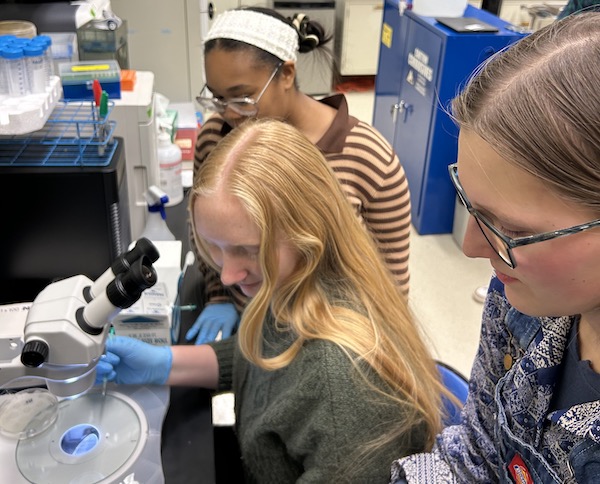
Students practicing the transfer of C. elegans between agar plates.
Proposal Summary:
Microgravity causes many health concerns for astronauts, including space motion sickness (SMS), which causes nausea and dizziness. As space aeronautics advances, and with growing interest in expanding space exploration, it becomes increasingly important to ensure astronaut health. Promethazine hydrochloride (HCl), an antihistamine, is currently used to treat SMS, but its pharmacokinetics in microgravity are not fully understood. This experiment is examining how promethazine HCl is metabolized in microgravity through the model organism Caenorhabditis elegans (C. elegans). As a result of their previous uses in both drug testing and space related experiments, C. elegans are the ideal subject for the proposed experiment. The specimens will be transported as dauers, which will permit them to survive longer under the SSEP’s experimental constraints. The initiation of the experiment will involve the specimens’ release into a larger compartment containing C. elegans maintenance medium (CeMM) and promethazine HCl. To end the experiment, formalin will be released into the other compartments, killing the C. elegans whilst maintaining their metabolic reaction to the medication. Using metabolomics via high pressure liquid chromatography (HPLC), metabolites of promethazine HCl from the media and the C. elegans will be analyzed in comparison with the control samples. The hypothesis of this experiment posits that the quantity of metabolites from the media and the C. elegans will decrease in spaceflight as compared to on Earth. The results of this study aim to deepen the understanding of promethazine HCl’s potential effects on future deep-space missions, and the overall efficacy of drugs in spaceflight.
HONORABLE MENTION FINALISTS:
Effects of Exogenous Cytokinin trans-Zeatin on Automorphogenesis, Chloroplast Density, Biomass, and Tissue Development of Wild Type Arabidopsis thaliana in Microgravity
Grades 13-14, Ohio University
Co-Principal Investigators: Regan Daniher, Izzy Krieg, Joey Nehrbass
Teacher Facilitator: Marzieh Moradifar
Proposal Summary:
Gravity plays a significant role in plant development, regulating cell orientation, nutrient transport, and root architecture through gravitropism; a directional growth response modulated by hormonal signaling. Cytokinin, a class of plant hormones responsible for regulating cell division, cell differentiation, and chloroplast development, is a key mediator of root
development. Among them, cytokinin trans-Zeatin (tZ) is a particularly active mutant that influences xylem transport, and vascular tissue organization. This study utilizes Arabidopsis thaliana (A. thaliana), a small flowering plant, and model organism for plant biology research, to investigate exogenous tZ in development under microgravity conditions. This will clarify how tZ functions differently from other Plant Growth Regulators (PGRs) in microgravity. Analyzing genetic and cellular responses contributes to understanding how tZ-driven signaling affects automorphogenesis, the vital process of establishing organized curvature of roots in microgravity. The hypothesis is that observing the effects of tZ on cell division and gene expression in A. thaliana will reveal intricacies in cellular growth processes within an environment of lesser-studied abiotic stresses. The tZ signaling pathway may be robust compared to well-studied PGR hormones such as auxin, enabling A. thaliana to lessen morphological disruptions in spaceflight. Results from this experiment may usher new strategies to sustain plant growth in extraterrestrial environments, supporting long-term space missions, and advancing understanding of plant responses to abiotic stresses. By examining multi-omic differences in A. thaliana on the International Space Station and its ground control, this investigation aims to contribute to broader understandings of cytokinin’s influence in microgravity and earth’s gravity conditions.
The Impact of Microgravity on Growth Morphology and Lattice Perfection of Copper Sodium Sulfate Co-Crystals
Grades 13 and 15, Ohio University
Co-Principal Investigators: McKinley Bowers, Julissa Biggs, Tran Quoc Thien Vu
Teacher Facilitator: Zeinab Fayyaz
Proposal Summary:
This investigation aims to determine if microgravity in replacement of gravity-driven convection will yield more perfect Copper Sodium Sulfate Co-Crystals, to be used for future Sodium-Ion Batteries and other related technologies. Earth’s gravitational convection causes non-uniform crystal growth. This allows for impurities and other structural defects to form within the crystal
lattices, resulting in lower and inconsistent flow in energy-storage materials, such as batteries. By using a seed crystal that will interact with the Copper Sodium Sulfate supersaturated aqueous solution, Copper Sodium Sulfate crystals will be produced. These crystals will be studied regarding their purity and physical sizes, as both characteristics are important to industry
applications. Higher lattice perfection will enable smoother ion movement and therefore increase the charging rate and conductivity of the crystals. Having a more homogeneous shape throughout the crystal structure will create an equal distribution of charged ions, resulting in an increased overall energy density of a battery cell containing said material. Research in this field is still a new and growing topic- there have not been many previous ISS experiments focusing on the cocrystallization of two inorganic salts relevant to Sodium-Ion Batteries. This further underlines the importance of understanding and testing how microgravity affects crystal perfection. NASA’s continuous development of innovation and discoveries in this field, along with the results of this experiment, will lead the way in creating more efficient and more sustainable space power systems, as well as alternative energy sources that lower waste products and carbon emissions on Earth.
18. Pittsburgh, Pennsylvania – CCAC
Jump to Pittsburgh’s Community Profile
SELECTED FOR FLIGHT:
Evaluating the Effect of Microgravity on Insulin Activity and Glucose Regulation Post-Flight
Grades 13-14, Community College of Allegheny County
Principal Investigator: Need permission to post names
Investigator: Need permission to post names
Teacher Facilitator: Francis Cartieri
Proposal Summary:
This experiment examines whether exposure to microgravity alters the structure or activity of the protein hormone insulin. Insulin is essential for controlling blood-glucose levels in the body, and astronauts must rely on stored medications during missions. The microgravity environment, along with radiation and vibration, could change how insulin molecules fold or function over time. We will use a Type 3 Rhodium Fluid Experiment Tube (RhFET-01) that separates insulin, glucose solution, and a fixative. At A+2, the astronaut will mix the first two chambers to simulate insulin interacting with glucose under space conditions. At U–5, the second valve will be opened to introduce the fixative and stop the reaction. The same procedure will be carried out on Earth at 1 g for comparison. By studying changes in glucose concentration and protein structure after flight, we hope to learn whether microgravity affects insulin’s ability to regulate sugar levels. This research can help prepare for future human missions that require long-term medication storage.
HONORABLE MENTION FINALISTS:
Microgravity Effects on Fibroblast‑Driven Tissue Formation in a Zebrafish (ZF4) Model
Grades 13-14, Community College of Allegheny County
Principal Investigator: Need permission to post names
Investigator: Need permission to post names
Collaborator: Need permission to post names
Teacher Facilitator: Francis Cartieri
Proposal Summary:
This experiment examines how microgravity affects fibroblast morphology, collagen synthesis, and extracellular matrix formation using a zebrafish (ZF4) fibroblast model. A Type 3 Rhodium Fluid Experiment Tube will hold cryopreserved cells, nutrient medium, and fixative, activated in orbit to allow cell recovery and matrix deposition. A ground truth control version of the experiment at 1 g will provide comparison. Post-flight microscopy and image analysis will assess collagen density and fiber alignment. We hypothesize that fibroblasts in microgravity will show reduced spreading and disorganized ECM, advancing understanding of tissue regeneration and informing wound-healing strategies for astronauts and regenerative-medicine applications on Earth.
Microgravity Effects on Blood Cell Distribution in an Ectothermic Model Organism
Grades 13-14, Community College of Allegheny County
Co-Principal Investigators: Need permission to post names
Teacher Facilitator: Francis Cartieri
Proposal Summary:
This experiment investigates how microgravity influences the layering and spatial distribution of blood cells from an ectothermic (cold-blooded) animal. On Earth, gravity helps separate heavier red blood cells from plasma, creating a vertical gradient that affects how oxygen and nutrients move through tissues. In microgravity, that separation may not occur, changing circulation and
possibly oxygen delivery. To explore this safely, we will use a zebrafish (Danio rerio) blood-cell model, prepared from whole blood diluted in culture medium. A Type 3 Rhodium Fluid Experiment Tube (RhFET-01) will contain three chambers: one with the cell suspension, one with a polymer solution that solidifies when mixed to “freeze” the pattern in place, and one with fixative for final preservation. The astronaut will activate each step at pre-set times. By comparing the returned microgravity sample to an identical ground control, we can observe whether blood cells cluster differently when gravity is absent. Understanding these effects can help explain how circulation changes in space and guide biomedical planning for long-term missions.
19. San Antonio, Texas
Jump to San Antonio’s Community Profile
SELECTED FOR FLIGHT:
The Effects of Microgravity On the Growth of Stems and Roots in Length and Direction of Rye Plants
Grade 7, Space and Engineering Technologies Academy (SETA) at Krueger Middle School, North East ISD
Principal Investigator: Miah Stepanenko-Riccio
Investigators: Anjail Penaflor, Andrew De Marigny
Teacher Facilitator: Kameron Sakaguchi
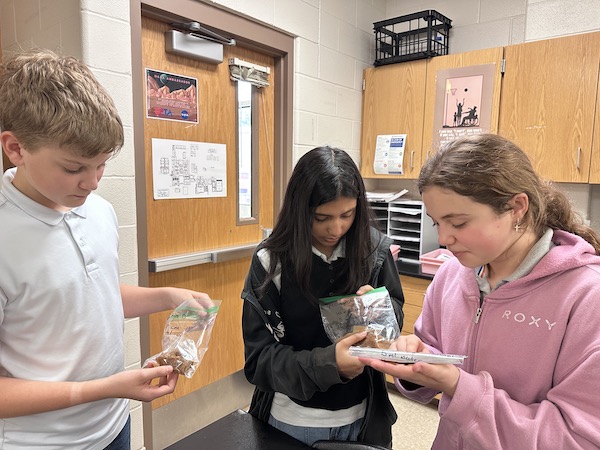
SETA SSEP team checking the germination rate of rye seeds based on different amounts of water.
Proposal Summary:
The experiment will study the growth in length and direction of stems and roots of Rye Plants (Secale Cereale) in microgravity. In summary, the experiment will test if microgravity changes the way rye seed’s stems and roots grow. The reason for this experiment is to learn more about how plants grow in space and, if possible, to see if future astronauts could potentially grow produce in space. If the experiment determines that growth in space is possible, it could make way for future research and help us understand more about plant life in space.
HONORABLE MENTION FINALISTS:
How Will the Regenerative Capabilities of Hydra Vulgaris Change Once Placed In An Enclosed Environment and Exposed to the Conditions of Microgravity?
Grade 8, Space and Engineering Technologies Academy (SETA) at Krueger Middle School, North East ISD
Principal Investigator: Thamer Khoueldi
Investigators: Michael Engelhardt, Benjamin Helberg-Carmiol, Aleph Ryan
Teacher Facilitator: Tracy Thomas
Proposal Summary:
The basis of the experiment, “The Hydra Vulgaris Microgravity Experiment,” is to observe the effects of exposure of microgravity on Hydra vulgaris’s regenerative capabilities after the aforementioned scenario. To do this, the project will ask an important question: “How will the regenerative capabilities of Hydra vulgaris change after being placed in an enclosed environment and exposed to the conditions of microgravity?” To answer this, the experiment will utilize a type 3 Rhodium Fluid Experiment Tube (RhFET-01), fresh water, two volumes of brine shrimp for the hydra to eat, and naturally, one hydra. A ground element with identical setup, only without microgravity, will be conducted at the same time. After the experiment comes back to Earth, the hydra will be cut at the base of a limb in order to observe how the regeneration system may have been affected. This will give insight into the lasting effects, if any, of exposure to microgravity on the hydra’s regeneration capabilities. This insight can help humans understand the lasting effects of microgravity on complex cellular functions and provide crucial information for one of the regeneration mechanics that the hydra uses, morphallaxis. The data gained from this experiment can also help to further develop the field of regenerative medicine and surgery on Earth, and very possibly, beyond.
How Does Microgravity Affect the Growth of Long-Jawed Orb Weaver Spider (Tetragnathidae) Eggs?
Grade 8, Space and Engineering Technologies Academy (SETA) at Krueger Middle School, North East ISD
Principal Investigator: Bernadette Johnson
Investigators: Jeremiah Martinez, Victoria Rosalez, Daniela Perales
Teacher Facilitator: Tracy Thomas
Proposal Summary:
How Does Microgravity Affect the Growth of Long-Jawed Orb Weaver Spider (Tetragnathidae) Eggs? The experiment is being conducted so scientists can gain more knowledge on the growth of eggs in microgravity. The knowledge of egg growth will help people living on the ISS, Moon, and all other explorations, if they decide to use oviparous (egg laying species) for food, habitat diversity, or pest control. The current scientific understanding is that, as an animal embryo develops, the cells divide, grow, and move in specific directions to make an elaborate body. The research that has been conducted in microgravity has been research of the web making abilities of spiders. There has not been any research conducted on the egg growth or reproduction of arachnids. To measure the results of the growth of the Long-Jawed Orb Weavers (Tetragnathidae), there will be an RhFET-02 tube on the ISS and a control on Earth. Before the RhFET-02 launches, and after the tube returns, the results and data of the control and test tube will be recorded and compared. The conditions on the ISS and Earth are identical, except for the microgravity on the ISS. The egg growth will be measured by a ruler to find the diameter as well as letting them hatch to see visible deformities which will be studied by the team.
20. iForward-Grantsburg, Wisconsin
Jump to iForward-Grantsburg’s Community Profile
SELECTED FOR FLIGHT:
The germination and growth of lentil sprouts in microgravity
Grade 7, iForward Public Online Charter School, Grantsburg School District
Co-Principal Investigators: Allan Jackson, D’Symber Jackson, Leauna Lamphere, Moses Packard, Kegan Wilmar
Collaborators: Alivia Basler, Alivia Radke
Teacher Facilitator: Joie Berg, B.S. Ed.

iForward flight team, displaying their green lentil seeds and other experimental materials.
Proposal Summary:
This proposal discusses the analysis of growing lentil sprouts in microgravity. Lentil sprouts would provide many beneficial minerals and vitamins, positively impacting the astronaut’s health. It has been proven that plants can acclimate to space and develop a different growth pattern, making them more nutritious for astronauts. This knowledge helps to demonstrate that plants can grow quite well in space. The research team aims to compare the size and root length of lentil sprouts grown in microgravity with those grown on Earth. The research team is using a Rhodium Fluid Experiment Tube (RhFET-01) Mini-Laboratory Configuration. In volume 1, there will be 3mL of water. In volume 2, there will be 2 mL of soil with 4 lentil seeds. Then, finally, in volume three, 3 ml of formalin. To start this experiment, the astronauts will open Valve A and gently shake the tube for 20 seconds. Next, they would have to wait. The experiment would have a better chance if left alone until the end of the experiment. To finally stop the experiment, they would open valve B, introducing the formalin into the mixture, and gently shake it to mix, then stop the experiment. The research team hypothesizes that due to the lack of sunlight, the lentil sprouts grown in microgravity will be smaller compared to those grown on Earth.
HONORABLE MENTION FINALISTS:
How will Chia Seeds Germinate in Microgravity?
Grade 9, iForward Public Online Charter School, Grantsburg School District
Co-Principal Investigators: Mercy Crum, Samantha Mormann, Faith Wondra
Investigators: Callen Fugette, Raelynn Louis, Autumn Manos
Teacher Facilitator: Tayyaba Qureshi, M.S., B.S.
Proposal Summary:
In this proposal, the experiment will see if chia seeds will germinate and or sprout in microgravity. This experiment is important because chia seeds contain many beneficial vitamins and other minerals to support the growth of the human body. These vitamins and minerals are very valuable to astronauts because their health declines rapidly in microgravity, unlike on Earth, where there is gravity. Chia seeds help keep bones and teeth strong and sturdy because of the minerals found inside. Astronauts lose their bone density in space, but the materials found inside the chia seeds can reverse the loss and help increase the bone’s health and matter. The fiber in chia seeds will help to prevent different types of heart diseases and several types of cancers. Fats in chia seeds can help promote healthy brain function, heart health, and reduce inflammation in the body. Vitamins will protect the body’s cells from being damaged, and they will also protect the body’s tissue. In conclusion, chia seeds are very beneficial to the astronaut’s health in microgravity, from the vitamins to the minerals that increase strong and healthy bone structure.
Investigating the impact of microgravity on apple seed germination and growth to compare it to plants grown on Earth
Grade 9, iForward Public Online Charter School, Grantsburg School District
Co-Principal Investigators: Liam Cwiklinski-Kertscher, Aubrey Kelly, Kairrah Morris
Teacher Facilitator: Tayyaba Qureshi, M.S., B.S.
Proposal Summary:
This experiment asks how apple seeds germinate in microgravity and how they differ from those grown on Earth. It is important because it could provide insight into how microgravity affects plant growth in space. On day 1, unclamp and shake clamp A for 5 seconds. On day 3, gently shake clamp A for 10 seconds and re-clamp. On the final day, unclamp and shake clamp B for 10 seconds, then re-clamp to mix the fixative. The materials in each chamber of the 3 chambers: 5 apple seeds, 2g soil, 3ml water, and a fixative for preservation. Tools: rulers, microscopes, and scales. The steps for the astronauts are already listed, but the ground experiment steps are different. Seeds will be grown under normal gravity, with water added on day 0 and day 3, while taking pictures and making observations. For this experiment, testing apple seeds in space is what it’s all about. We also have an expert named Magdy Abdullah Eissa. This research is significant because it could help provide more insight into how microgravity affects plant growth. The group expects the apple seeds grown in microgravity to have different growth time, root length, and stem length. Prior research from the NHSJS suggests that stem length decreases under microgravity conditions. This research could improve fruit tree cultivation in space and support long-term food sustainability for astronauts. The experiment is worth doing because it adds to and confirms current knowledge about how plant seeds, specifically apple seeds, grow in space.