The National Center for Earth and Space Science Education, and the Arthur C. Clarke Institute for Space Education, are proud to present the 27 Mission Patches selected for flight to the International Space Station (ISS) for Student Spaceflight Experiments Program (SSEP) Mission 21 to ISS. The selected flight patches shown below resulted from local art and design competitions meant to capture the spirit of SSEP in each Mission 21 community.
The mission patch competitions foster community-wide awareness and engagement in the Student Spaceflight Experiments Program – an initiative that takes students, teachers, and the community at large to the space frontier through immersion in an authentic research experience. The 20 selected Mission 21 microgravity flight experiments from student teams, representing the 20 communities participating in Mission 21, comprise the SSEP Discovery experiments payload, named after NASA’s Space Shuttle orbiter Discovery.
As a historical note, mission patches have been part of human spaceflight since the days of Project Mercury in the 1960s (see, e.g., this page at the NASA History Program Office). The SSEP Mission Patch competitions therefore allow communities to engage in another authentic aspect of the space program. From an education standpoint, the mission patch component of SSEP forges interdisciplinary connections between STEM fields and art and design, so that SSEP is a true STEAM (Science, Technology, Engineering, Art, and Mathematics) initiative.
Across 16 of 20 Mission 21 to ISS communities conducting Mission Patch art and design competitions, 17,910 grade K-16 students were engaged, and 5.265 patch designs were submitted. Judges within the communities selected the 27 patches shown below.
You can also read more about the Mission 21 to ISS Patch Competition at the main SSEP website.
Quickly Scroll to Individual Communities
- Edmonton, Alberta, Canada
- Mississippi Mills, Ontario, Canada
- Mesa, Arizona
- Phoenix, Arizona
- Glendora, California
- Colorado Springs, Colorado
- St. Petersburg, Florida
- Tampa, Florida
- New Orleans, Louisiana
- Omaha, Nebraska
- Albany, New York
- Asheville, North Carolina
- Athens, Ohio
- Pittsburgh, Pennsylvania – CCAC
- San Antonio, Texas
- iForward-Grantsburg, Wisconsin
1. Edmonton, Alberta, Canada
Jump to the Edmonton Community Profile
Jump to the Selected Flight Experiment on Mission 21 to ISS
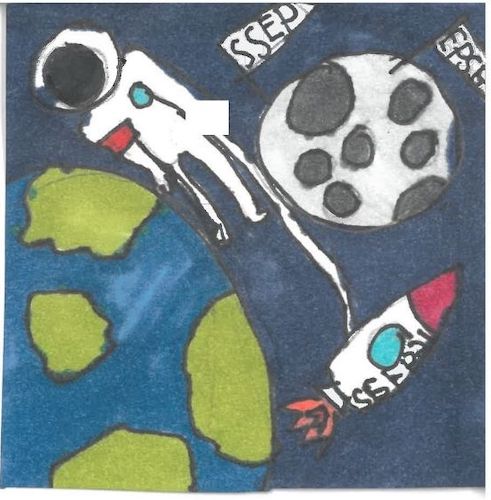
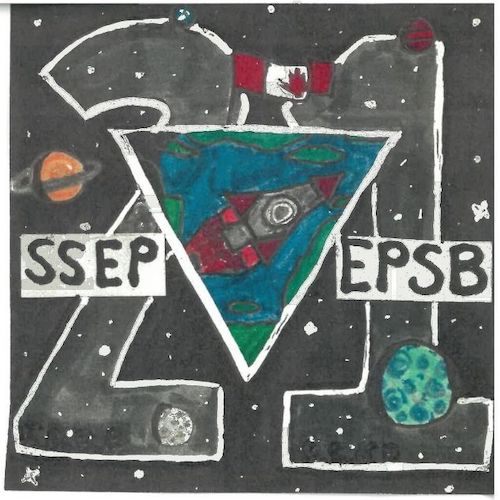
Edmonton Public Schools’ SSEP Mission Patch Competition was open to all division students in kindergarten to grade nine. There were two competitions: kindergarten to grade four and grades five to nine. 106 grade K-4 students participated and submitted patch designs and 178 grade 5-9 students participated and submitted patch designs. The patches were judged by panels of students, staff, and family members. Ten schools submitted patches to the Division level competition. Two patches were selected to represent the community alongside the winning experiment. The patches selected to represent Edmonton Public Schools were created by Serenity Pruden (a Grade 4 student at York School) and Jaxson Lee (a grade 8 student at Dr. Margaret-Ann Armour School). Congratulations to all students that participated!
2. Mississippi Mills, Ontario, Canada
Jump to the Mississippi Mills Community Profile
Jump to the Selected Flight Experiment on Mission 21 to ISS
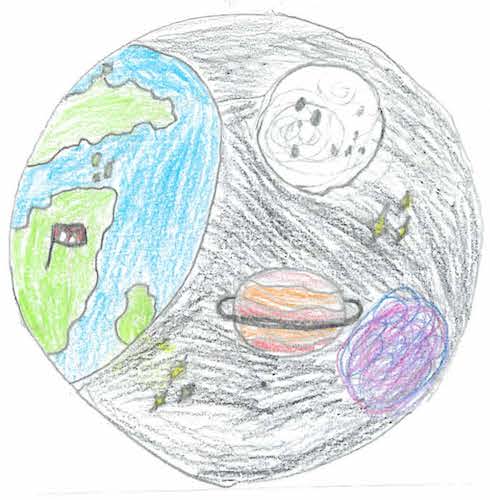
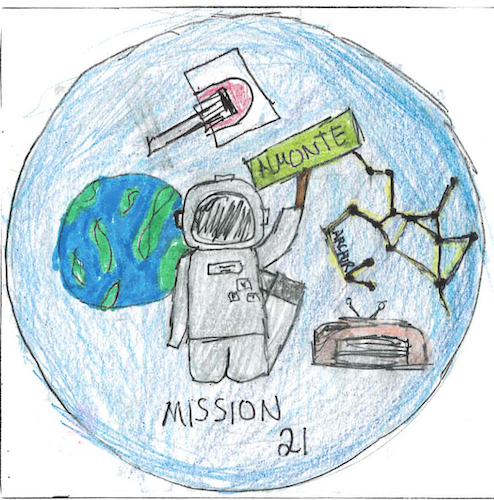
The UCDSB’s Almonte Family of Schools Mission Patch Competition invited all students from Kindergarten to Grade 6 to take part. The competition was divided into two categories: K-Grade 3 and Grades 4-6. In total, 359 students (179 in K-3 and 180 in 4-6) submitted flight patch designs. Participants were challenged to create a patch that reflected both the spirit of exploration and the unique character of our community. Students drew inspiration from local history, including James Naismith, the inventor of basketball, who was born in Ontario. In a meaningful tribute, every design also featured the color green in honor of Archer Lowe, an R. Tait McKenzie student who passed away last year. Panels of local artists carefully reviewed the submissions. Two patches were ultimately selected to represent the Almonte Family of Schools and its rich history alongside the winning experiment. The chosen designs were created by Audrey Sandal of Naismith Memorial School and Charlotte Hicks of Pakenham Public School. Congratulations to all students for their creativity, thoughtfulness, and outstanding participation!
3. Mesa, Arizona
Jump to the Mesa Community Profile
Jump to the Selected Flight Experiment on Mission 21 to ISS
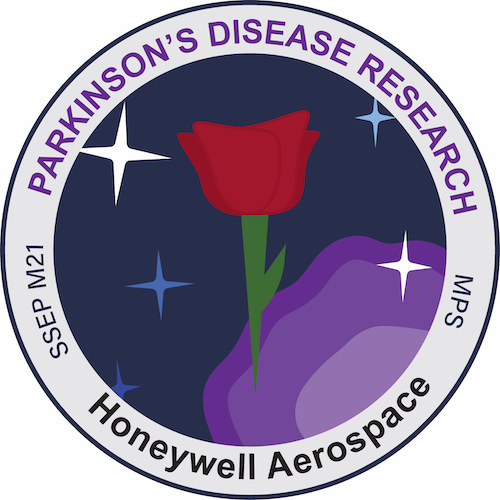
Over 300 grade 4-12 students from 4 different schools participated in the Mission Patch Competition, creating approximately 60 mission patch designs. Designs originated in the elementary and junior high schools where students also wrote about the symbolism they included in their design. Their ideas, symbols, and designs were based on the SSEP M21 finalist experiments from our community. Next, the high school graphic design and digital media students took over using the writing, symbolism, and basic designs to create final patch designs in consultation with industry mentors. Finally, the top patch design was determined by a vote of Honeywell Aerospace employees!
4. Phoenix, Arizona
Jump to the Phoenix Community Profile
Jump to the Selected Flight Experiment on Mission 21 to ISS
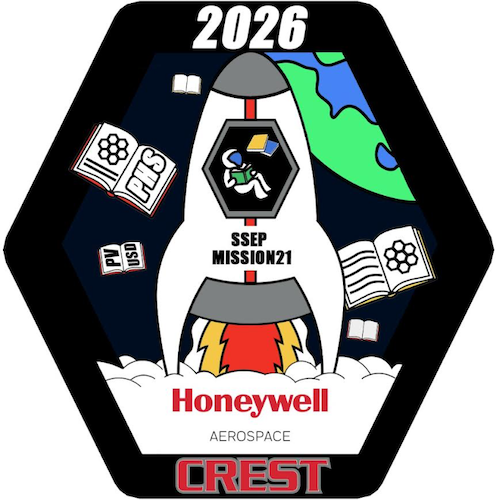
Paradise Valley Unified School District’s Mission Patch Competition engaged students in grades K–12 across the district. More than 950 students in grades K–6 from six elementary schools created and submitted individual mission patch designs representing the district’s SSEP mission. Each school selected semifinalists, and those designs advanced to a district review process. District staff and Pinnacle High School graphic design students evaluated the semifinalists and selected three elementary finalist concepts to refine into professional digital artwork. The winning concept came from a fifth grade student at Sonoran Sky Elementary whose design highlighted curiosity, learning, and the risks astronauts take while exploring space. A Pinnacle High School graphic design student refined the artwork into the final patch, incorporating the structure of covalent organic frameworks to represent the district’s selected SSEP experiment from a CREST team at Paradise Valley High School. Employees from the community partner, Honeywell Aerospace reviewed the finalists and selected the winning mission patch.
5. Glendora, California
Jump to the Glendora Community Profile
Jump to the Selected Flight Experiment on Mission 21 to ISS
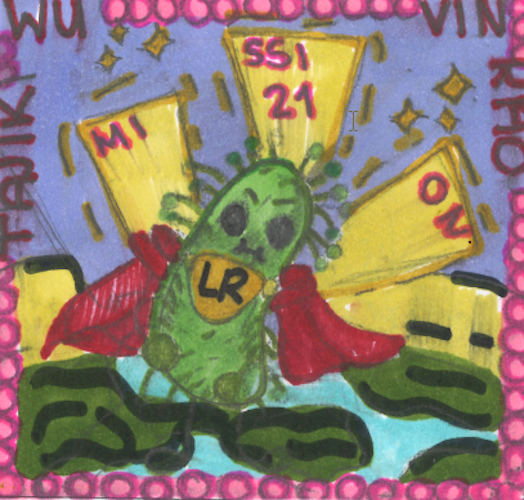
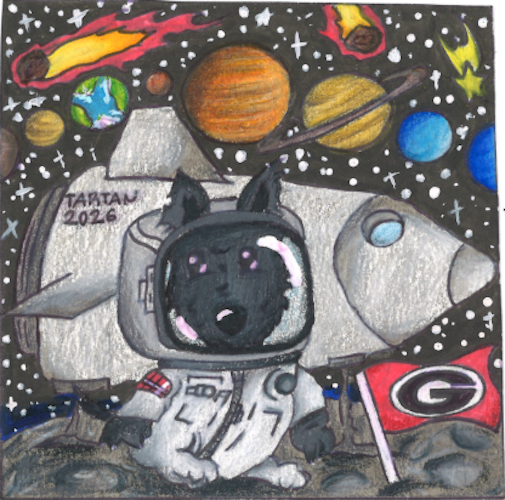
The Glendora Unified Mission 21 patch contest saw strong participation from students across all grade levels. Approximately 95 students from grades 4-8 entered (each submitting an unique submission) the coloring and patch design contests, while about 175 high school students took part in the 8-12 competition (each submitting an unique submission). Entries were judged by a panel of district staff, and the winning designs were showcased in a gallery at the District Office Board Room. The winners were honored by the School Board Trustees during a regular meeting, celebrating both the Mission 21 team and the patch design winners.
6. Colorado Springs, Colorado
Jump to the Colorado Springs Community Profile
Jump to the Selected Flight Experiment on Mission 21 to ISS
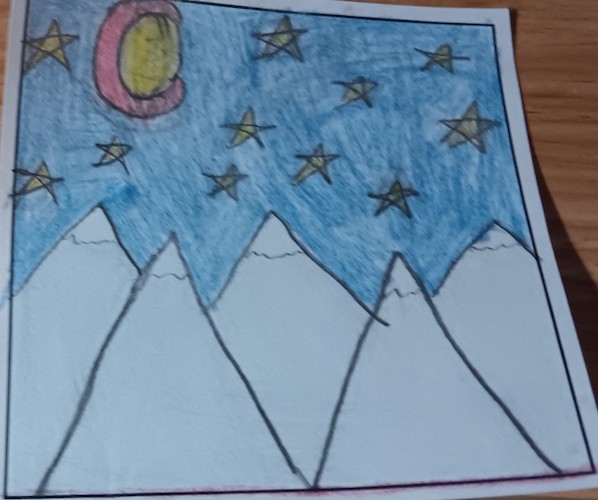
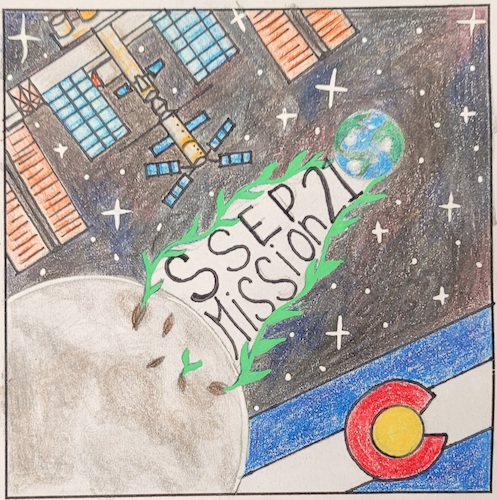
The University of Colorado Springs/Pikes Peak State College SSEP Mission Patch Design Competition consisted of two age groups: K – 6th grade and 7 – 12th grade. More than a dozen K – 12 schools were invited to participate in the competition. Approximately 30 students were engaged in each competition with a total of 20 patch designs submitted (10 per competition). Kuna Archuleta, a second grader from Howbert Elementary was selected for the K – 6th grade category, and Jadalynn McKague, a senior from Widefield High School, was selected for the 7 – 12th grade category.
7. St. Peterburg, Florida
Jump to the St. Petersburg Community Profile
Jump to the Selected Flight Experiment on Mission 21 to ISS
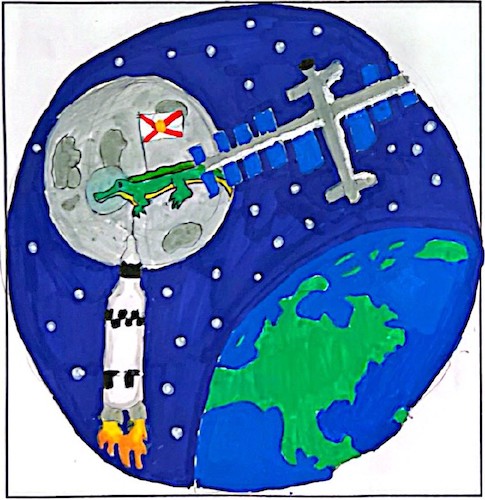
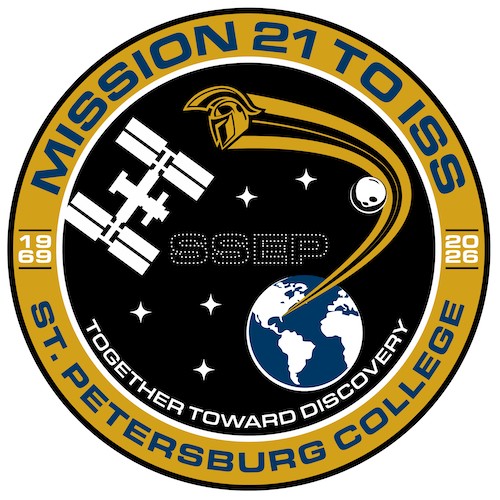
St. Petersburg College conducted two Mission Patch Art and Design Competitions for SSEP Mission 21 to the International Space Station — one open to SPC students and one open to K-12 students across Pinellas County and the greater Tampa Bay Area. A total of 118 patch designs were submitted by 118 SPC students, and 130 patch designs were submitted by 130 K-12 students from schools throughout the region. A selection committee of students, faculty, and staff evaluated all submissions using a standardized rubric assessing three criteria: Community Identity & Representation, Mission Relevance & Symbolism, and Artistic Quality & Visual Impact. The SPC winner is Mark DeRemer, a Digital Media A.S. student at St. Petersburg College concentrating in graphic design and visual storytelling. His winning patch incorporates SPC’s colors, a helmet launching into space representing the spirit of the institution, five stars symbolizing the STEAM disciplines, and flowing lines evoking launch and forward movement. The K-12 winner is Andrei Popescu, a fourth grader at Gulf Trace Elementary School. It is a particular point of pride for the SPC community that Andrei is the son of Dr. Adrian Popescu, a member of our faculty. Congratulations to all students who participated in this inspiring celebration of STEM and the arts.
8. Tampa, Florida
Jump to the Tampa Community Profile
Jump to the Selected Flight Experiment on Mission 21 to ISS
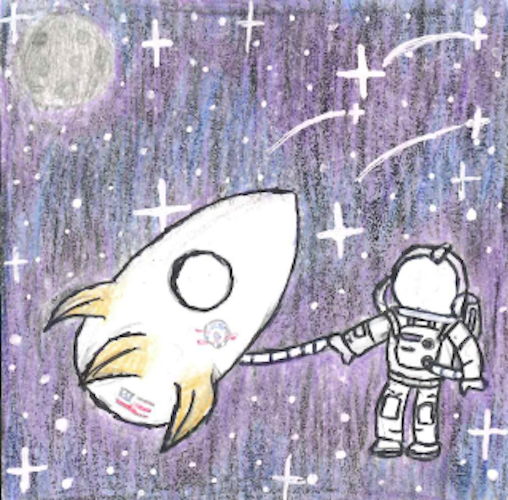
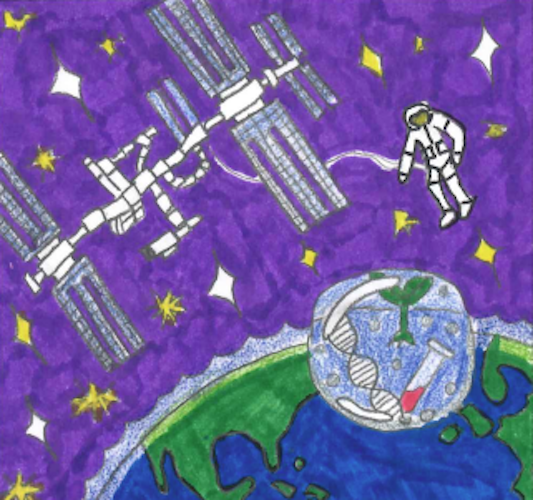
Hillsborough County Public Schools opened the Mission 21 Patch Competition to 144,446 school students in our community, which represented over 250 schools. We divided the competition – one for Kindergarten through Fifth Grade students and another for Sixth through Eighth Grade students. The elementary competition engaged 6,792 students from 11 schools with 108 students submitting patches for judging and the middle school competition engaged 5,164 students from 5 schools with 57 students submitting patches for judging. 165 patches met the requirements for judging by a committee of teachers and community leaders. The Kindergarten through Fifth Grade Mission Patch winner is Eeshan Kallu, 3rd Grade, Dorothy C. York Innovation Center, Apollo Beach, Florida. The winning patch from the Sixth Grade through Eighth Grade competition is Maddox Sewell, 8th Grade, Turkey Creek Middle School, Plant City, FL
9. New Orleans, Louisiana
Jump to the New Orleans Community Profile
Jump to the Selected Flight Experiment on Mission 21 to ISS
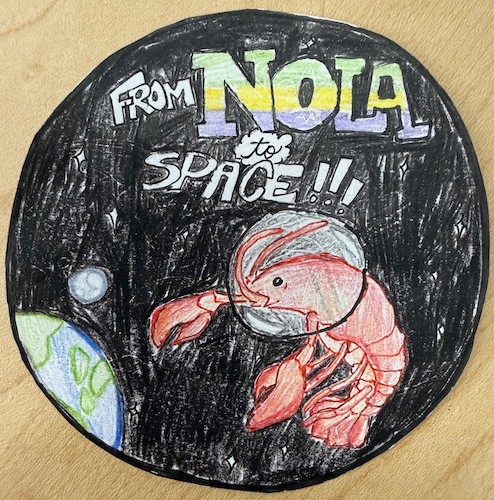
Through Tulane University’s K-12 STEM Outreach program, four schools in the greater New Orleans area participated in the International Space Station Mission 21 patch design competition for students in grades 6 – 8. More than 150 middle school students from Holy Cross, Benjamin Franklin, St Edward the Confessor, and John Curtis Christian Schools individually created mission patch drawings. Teachers at each school selected their top patches that were then judged by a panel of Tulane University undergraduate, graduate students, and faculty. The winning middle school patch was designed by Holy Cross student John Tran, who was mentored by teacher Tara Lavender. The design captures the Mardi Gras colors of green, purple and gold, and portrays the Gulf South’s tastiest treat: a crawfish astronaut as a space ambassador.
10. Omaha, Nebraska
Jump to the Omaha Community Profile
Jump to the Selected Flight Experiment on Mission 21 to ISS
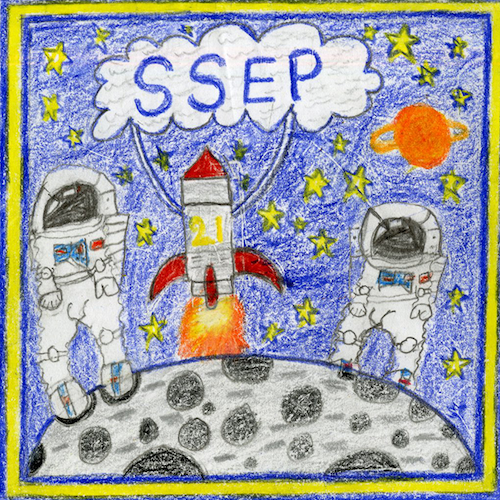
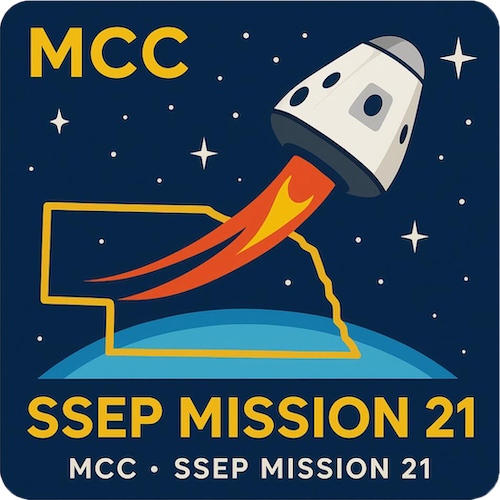
Nearly 600 students submitted designs to Metropolitan Community College’s (MCC) SSEP Mission 21 Patch Design Competition. The event was open to K–12 students in MCC’s four-county service area, as well as students enrolled at MCC. Two divisions were offered: one for students in grades K–8 and another for students in grades 9–14. We received 449 submissions from students in grades K–8 and 133 submissions from students in grades 9–14. A panel of faculty members served as the selection committee. In the younger category, Bhavya Bhooma, a fourth-grade student from Swanson Elementary, designed the winning patch. In the high school through college category, Ayreonna Toney-Primes, a senior at Westview High School, designed the winning patch.
11. Albany, New York
Jump to the Albany Community Profile
Jump to the Selected Flight Experiment on Mission 21 to ISS
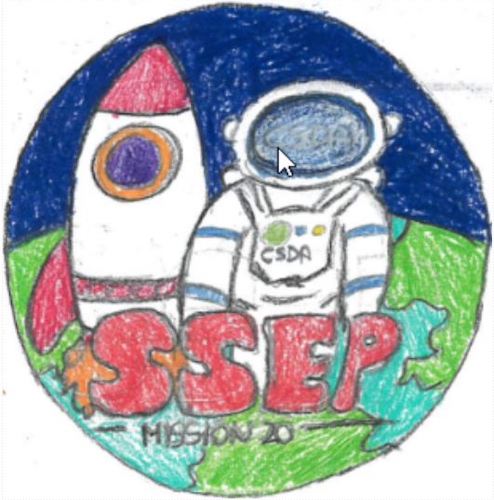
We had over 200 students in grades 6 and 7 submit just over 200 mission patches for consideration. Our review committee narrowed the field down to a few dozen who met our patch aesthetics and rationale requirements, then selected the attached winning patch.
12. Asheville, North Carolina
Jump to the Asheville Community Profile
Jump to the Selected Flight Experiment on Mission 21 to ISS
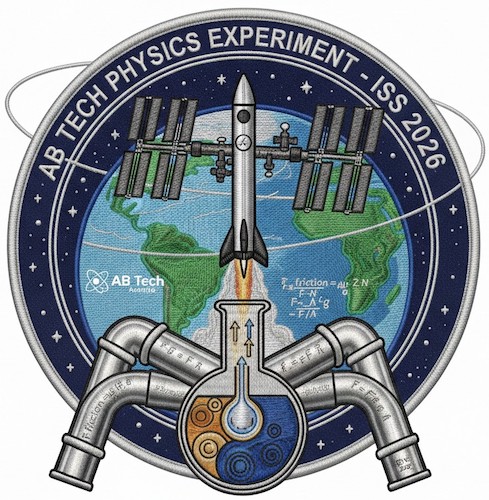
Asheville Buncombe Technical Community Colleges’ SSEP Mission Patch Competition was open to students within the region from middle school to college. We had a total of 101 student participants for a total of 96 submissions from Asheville Buncombe Technical Community College, ArtSpace Charter School, Buncombe County Early College High School, Oak Ridge Stem Academy, Martin L. Nesbitt Discovery Academy, Asheville High School, Madison Early College High School, A.C. Reynolds High School, and T.C. Roberson High School. Our overall winner, Paige Wiggins from Asheville Buncombe Technical Community College, was selected by Louise Genetti, a local Asheville artist! Congrats Paige and thank you Louise! Thank you also to all participating students and schools!
13. Athens, Ohio
Jump to the Athens Community Profile
Jump to the Selected Flight Experiment on Mission 21 to ISS
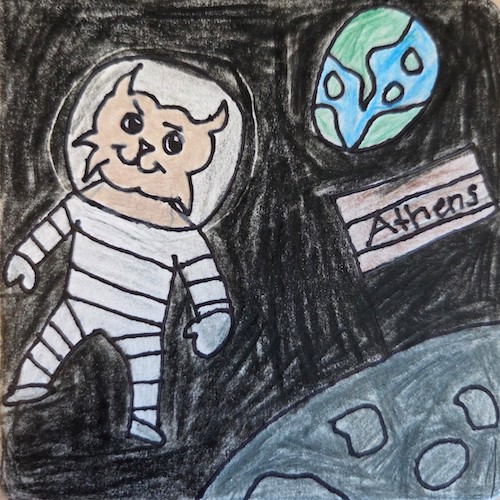
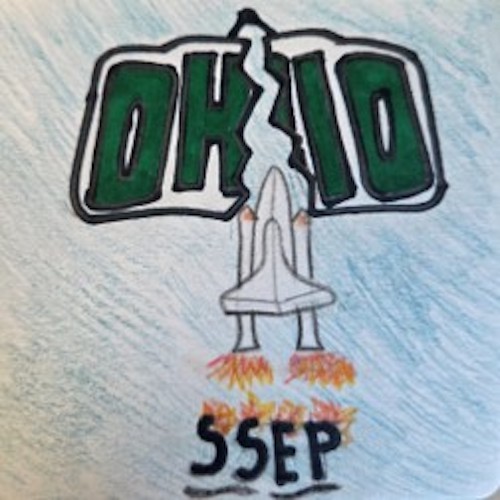
Ohio University proudly hosted this year’s Student Spaceflight Experiments Program (SSEP) Mission Patch Design Contest, engaging K–8 students across the Athens community in an authentic space science outreach initiative connected directly to microgravity research. The competition was structured into two age divisions, K–4 Division and 5–8 Division. A total of 1,650 students participated in the educational programming component of the initiative. From that group, 1,014 completed mission patch designs were officially submitted for judging, 692 designs from grades K–4 and 322 designs from grades 5–8. Patch winners in each division were selected by members of Alpha Chi Sigma (AXE), Ohio University’s professional chemistry fraternity. Judges evaluated submissions based on creativity, scientific relevance, visual clarity, symbolism, and overall design impact.
14. Pittsburgh, Pennsylvania – CCAC
Jump to the Pittsburgh Community Profile
Jump to the Selected Flight Experiment on Mission 21 to ISS
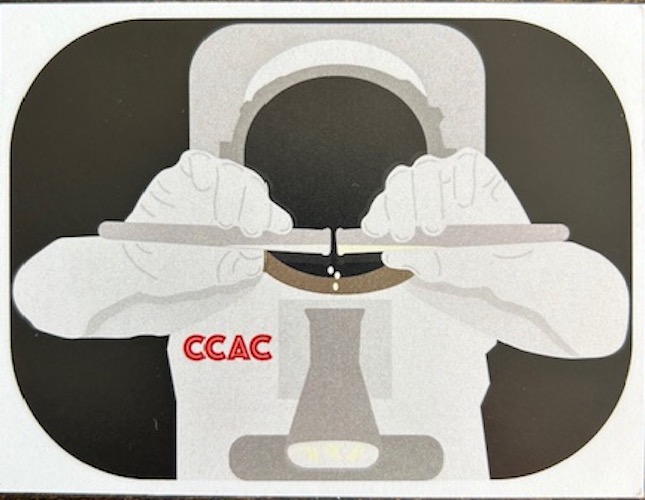
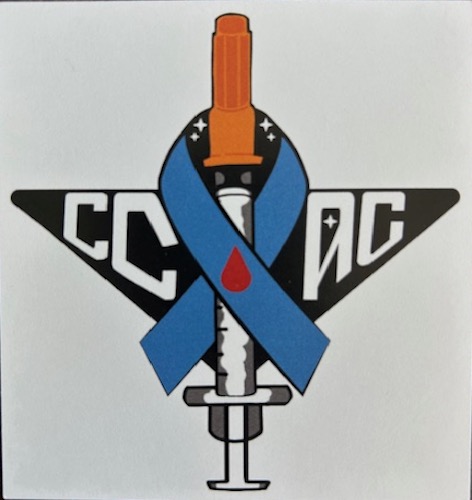
CCAC continued to invite participation from a broad range of high schools, middle schools, and career and technical centers in the Pittsburgh region. This broader participation model ensured that students from both traditional academic programs and technical education pathways had an opportunity to contribute to the mission patch process. Because of the number of participating schools, CCAC again divided the competition into multiple review pools to ensure that students received timely feedback and that judging remained equitable. Students from career and technical centers competed alongside their sending schools or within separate review pools, depending on participation levels and logistical needs. CCAC engaged more than 190 total students (95 in grades 5-8 and 104 in grades 9-16) through the Mission 21 patch competition when combining both K–12 and CCAC participants. The competition generated over 110 original patch designs (65 from grades 5-8 and 46 from grades 9-16) and created meaningful opportunities for mentorship, design iteration, and student engagement in the broader mission process.
15. San Antonio, Texas
Jump to the San Antonio Community Profile
Jump to the Selected Flight Experiment on Mission 21 to ISS
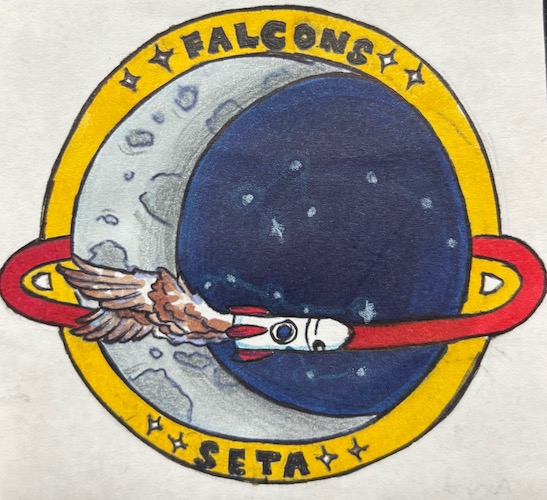
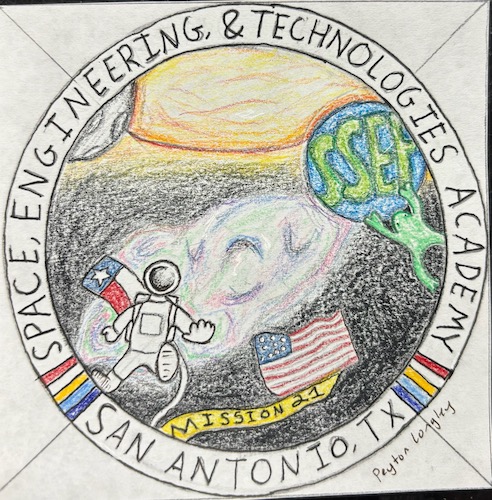
The Space and Engineering Technologies Academy goal was to engage as many students as possible in the Mission Patch Art and Design Competition. They decided on the 2-patch competition: one for 6th and 7th grade and one for 8th through 12th grade. The 6th/7th grade SETA Mission Patch Design Contest had 250 students participate and the 8th through 12th grade SETA Mission Patch Design Contest had 107 students participate in contests to design the mission patches for the Space and Engineering Technologies Academy’s third mission to the International Space Station. The History department administered the contests. The winning designs were selected by a majority vote from all SETA teachers. One design from each contest was selected to fly on Mission 21.
16. iForward-Grantsburg, Wisconson
Jump to the iForward-Grantsburg Community Profile
Jump to the Selected Flight Experiment on Mission 21 to ISS
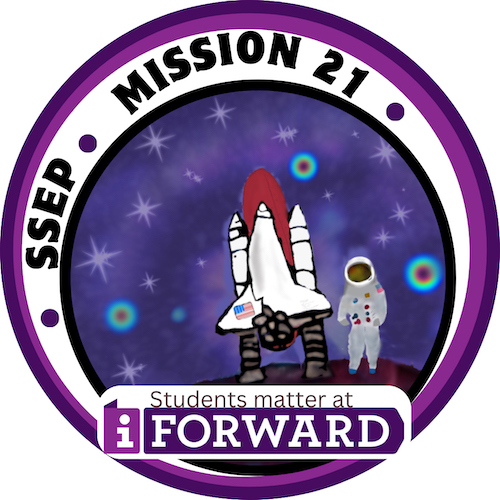
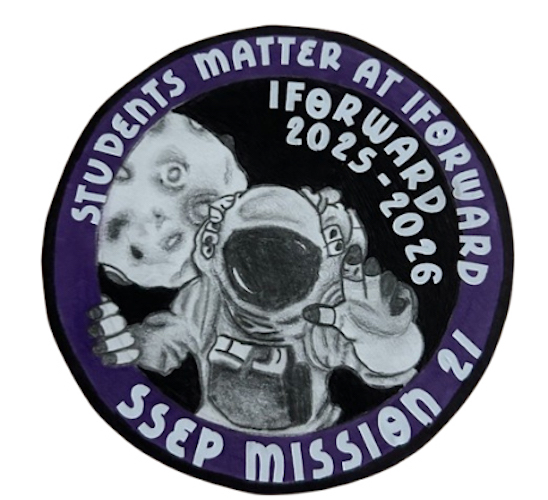
iForward Wisconsin Online Charter School conducted a two-mission patch competition for SSEP Mission 21 to the International Space Station, our ninth consecutive year participating in this powerful learning opportunity that connects young scientists and artists from across the world. Our virtual online charter school educates over 1,100 students, grades K-12, from across the beautiful state of Wisconsin. The Mission 21 Patch Project engaged 481 online students at the elementary, middle school, and high school levels. Students met the goal for the two-patch competition with 258 students in grades 8-12 and 223 students in grades K-7 participating. A total of 420 possible designs were submitted to the initial review committee vying for the trip aboard the International Space Station. Our winning participants, tenth-grader Mackenzie Schmidt, and fourth-grader Arlandria Lamphere, met proficient learning goals in science, technology, engineering, art/design, and math through their original creations. The designs were selected to represent the iForward online community on Mission 21.