Click to Zoom
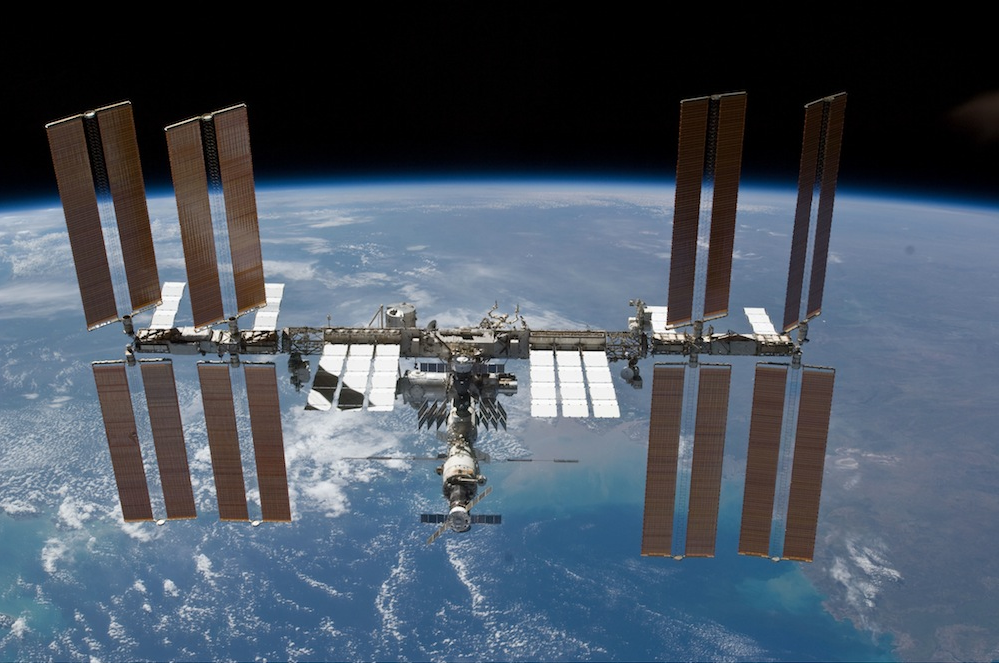
The National Center for Earth and Space Science Education (NCESSE), and its international arm, the Arthur C. Clarke Institute for Space Education, are honored to announce the start of program operations for Student Spaceflight Experiments Program (SSEP) Mission 22 to the International Space Station (ISS) – the 24th SSEP flight opportunity since program inception in 2010. Mission 22 to ISS officially begins on September 1, 2026, and we are proud to welcome aboard the 30 communities listed below.
Each participating community submitted a formal Implementation Plan for review and approval, which demonstrated how SSEP would address their community’s strategic needs in STEM education, and detailed a real world plan for how a Local Team of educators would engage up to hundreds of students in real microgravity experiment design and proposal writing. Based on the Implementation Plans, the 30 Mission 22 communities will engage a little more than 4,450 grade 5-16 students in experiment design, and over 650 flight experiment proposals are expected from student teams. A 2-step formal proposal review process, culminating with the SSEP National Step 2 Review Board meeting in December 2026 near Washington D.C., will select one flight experiment for each community.
Of special note (institution names are provided in the Mission 22 community list at the bottom of this post)–
- 10 of the 30 Mission 22 communities are returning communities: Mission 22 is the tenth mission for iForward-Grantsburg, Wisconsin and the fifth mission for Pittsburgh, Pennsylvania – CCAC. Mission 22 is also the fourth mission for 3 communities, the third mission for 1 community and the second mission for 4 communities
- 24 of the communities are 2- and 4-year colleges and universities focusing on undergraduate engagement, in: Kingston, Ontario, Canada; Prescott, Arizona; Claremont, California; Colorado Springs, Colorado; Daytona Beach, Florida; Melbourne, Florida; St. Petersburg, Florida; Tampa, Florida; Chicago, Illinois; Westville/Hammond, Indiana; St. Louis, Missouri (St. Louis University); St. Louis, Missouri (Washington University); Kearney, Nebraska; Garden City, New York; New York, New York; New Bern, North Carolina; Oklahoma City, Oklahoma; Athens, Ohio; Coos Bay, Oregon; Pittsburgh, Pennsylvania (CCAC); Pittsburgh, Pennsylvania (University of Pittsburgh); Clemson, South Carolina; Greenville, South Carolina; and Williamsburg, Virginia
- One community is in Canada: Kingston, Ontario
The 30 flight experiments for Mission 22 to ISS will be selected by December 18, 2026, with a projected launch as the SSEP Armstrong payload of experiments in late Spring / early Summer 2027.
Community participation in Mission 22 to ISS has been made possible through NCESSE partnerships with Rhodium Scientific and the International Space Station (ISS) National Laboratory.
Funding for many of the participating communities was also provided by Local Partners – businesses, foundations, and individuals – which provided funding directly to participating schools in their area. The SSEP Mission 22 Community Profiles and Local Partners page is a place on the SSEP website where we provide a profile of each participating community, and we acknowledge the remarkable support provided by all National and Local Partners. We invite you to explore that page to read about your community, and assess if there are any partners that need to be added. To add partners, please contact SSEP Flight Operations Manager John Hamel, email: johnhamel@ncesse.org.
SSEP is a program of the National Center for Earth and Space Science Education (NCESSE) in the U.S. and the Arthur C. Clarke Institute for Space Education internationally. It is enabled through a strategic collaboration with Rhodium Scientific, America’s first commercial space biotech and mission Spaceflight Implementation Partner, working with NASA through a CASIS Agreement to utilize its facilities aboard the International Space Station. The International Space Station (ISS) National Laboratory is a National Partner on the Student Spaceflight Experiments Program.
Program Overview and Heritage to Date
The Student Spaceflight Experiments Program (SSEP) is designed as a national model for STEM education, and immerses up to hundreds of students across a participating community in an authentic real world, trans-disciplinary research experience as part of America’s Space Program. This is not a simulation – we are truly inviting each community into America’s Space Program. We are inviting all participating students to take on the role of real microgravity researchers – formally designing microgravity experiments against real world engineering and technology constraints, writing real proposals against a formal proposal guide, and going through a real proposal review competition. SSEP was created in the very best spirit of allowing our students to see firsthand what is expected of professional scientists and engineers on the frontiers of human exploration. SSEP gives students the ability to make an informed decision about a possible career in a STEM field through immersion in a real world research experience.
Each participating SSEP community is provided a flight certified, microgravity research mini-laboratory and launch services to transport the mini-lab containing one student team designed microgravity experiment to the International Space Station in Low Earth Orbit, where the astronauts will operate the experiment. Each community has a Local Team of educators that first delivers an established microgravity curriculum to participating students (at least 100+ students in a pre-college community, and at least 20 in an undergraduate community), and the students then form research teams of 3-5 students per team. Each of the resulting teams vie for the single experiment slot provided to their community through design of a research investigation – a microgravity experiment in a science discipline of their choice, and writing a proposal, mirroring how professional researchers secure limited research assets through a formal call for proposals. Review of all proposals culminates with the SSEP National Step 2 Review Board selecting the flight experiment for each participating community.
Heritage: Since program inception in 2010 (through Mission 21), 173,000 grade 5-16 students in 257 communities across the U.S., Canada, Brazil and Ukraine have been immersed in real research, designing microgravity experiments to fly to ISS. Over 33,000 formal research proposals have been submitted by student teams. To date, 442 experiments have flown to ISS and returned to Earth for harvesting and analysis by their student flight teams (Mission 19 experiments were the most recent to fly). Over 287,200 more students across the entire grade preK-16 pipeline were engaged in their communities’ broader STEAM experience, submitting 235,000 Mission Patch designs. Each year, communities send delegations to the SSEP National Conference where student flight teams report on experiment design and science results.
To get into the spirit of SSEP Mission 22 to ISS, the video below is the NASA live coverage of the launch of SpaceX CRS-31 from Kennedy Space Center in Florida at 9:29 pm ET, November 4, 2024. The CRS-31 Dragon spacecraft carried the 39 SSEP Mission 18 experiments to ISS. The experiments were conducted by astronauts for 6 weeks on orbit, with Dragon returning to Earth and splashing down in the Gulf of Mexico off the Florida coast, on December 17, 2024. Sunita Williams and Butch Wilmore are the 2 astronauts that participated in SSEP Mission 18 and operated the experiments on ISS. You likely know them, see below.
The 4 Mission 20 and the 20 Mission 21 experiments are scheduled to launch on SpaceX CRS-35 in October 2026 from Space Launch Complex (SLC) 40, Cape Canaveral Space Force Station in Florida. Stay tuned.
You can watch videos of all SSEP launches since program inception, with the first two SSEP payloads on the final flights of Space Shuttles Endeavour (STS-134) and Atlantis (STS-135), and watch videos of astronauts operating the experiments, at the Launch and On-Orbit Operations History page.
SSEP Mission 18 to ISS
Vehicle: SpaceX CRS-31
Launch: November 4, 2024 at 9:29 pm ET
Site: Space Launch Complex (SLC) 40, Cape Canaveral Space Force Station, FL
Payload Designation: SSEP20 – Surveyor, 39 experiments
SSEP Mission 18 Information: Flight Profile, Media Coverage, Press Kit
Mission 18 Participation: Participating Communities, Flight Mission Patches
Astronauts on ISS that operated the Mission 18 experiments:
You probably know Sunita and Butch. On 6/5/24 they were NASA’s senior astronauts that piloted the new Boeing Starliner spacecraft to the International Space Station. This first crewed flight of Starliner was supposed to return them to Earth in 8 days, on 6/14/24. But issues that were encountered with the new vehicle led NASA to return Starliner to Earth uncrewed on September 7, 2024. Sunita and Butch were stuck on Station for 286 days, returning on 3/18/25 on SpaceX Crew-9. While they were on their unplanned extended stay aboard Station, they operated the SSEP Mission 18 experiments.
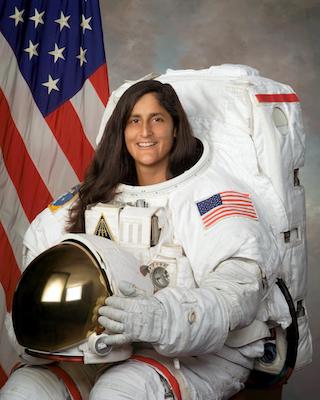
Sunita performed the A=0, U-5 and U-2 interactions on-orbit.
Sunita Williams (USA), NASA Astronaut [biography]
X: Astro_Suni
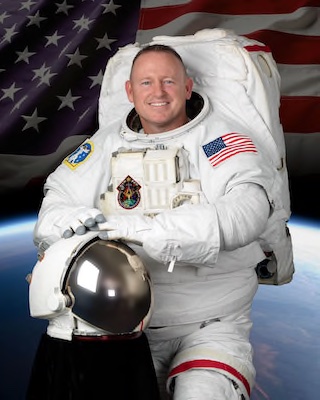
Butch performed the A+2 and U-14 interactions on-orbit.
Butch Wilmore (USA), NASA Astronaut [biography]
X: butch_wilmore
Mission 22 Communities – Welcome Aboard!
Read a profile for each community, with expected student engagement, institutional partners, and community leadership, at the SSEP Mission 22 Community Profiles and Local Partners page.
1. Kingston, Ontario, Canada
Queen’s University
2. Prescott, Arizona
Embry-Riddle Aeronautical University
3. Claremont, California
Scripps College
4. Colorado Springs, Colorado
(RETURNING COMMUNITY – 4th Mission)
University of Colorado, Colorado Springs
5. Brevard County, Florida
Brevard Public Schools
6. Daytona Beach, Florida
Embry-Riddle Aeronautical University
7. Melbourne, Florida
(RETURNING COMMUNITY – 3rd Mission)
Florida Institute of Technology
8. Osprey, Florida
(RETURNING COMMUNITY – 2nd Mission)
Pine View School for the Gifted
9. St. Petersburg, Florida
(RETURNING COMMUNITY – 2nd Mission)
St. Petersburg College
10. Tampa, Florida
(RETURNING COMMUNITY – 2nd Mission)
University of South Florida
11. Chicago, Illinois
Illinois Institute of Technology
12. Westville/Hammond, Indiana
Purdue University Northwest
13. Flint, Michigan
Carman-Ainsworth Community Schools
14. St. Louis, Missouri
Saint Louis University
15. St. Louis, Missouri
Washington University
16. Kearney, Nebraska
University of Nebraska, Kearney
17. Garden City, New York
Adelphi University
18. New York, New York
Baruch College
19. New Bern, North Carolina
Craven Community College
20. Oklahoma City, Oklahoma
Oklahoma City Community College
21. Athens, Ohio
(RETURNING COMMUNITY – 4th Mission)
Ohio University
22. Coos Bay, Oregon
Southwestern Oregon Community College
23. Pittsburgh, Pennsylvania
(RETURNING COMMUNITY – 5th Mission)
Community College of Allegheny County
24. Pittsburgh, Pennsylvania
University of Pittsburgh
25. Clemson, South Carolina
Clemson University
26. Greenville, South Carolina
Bob Jones University
27. Arlington, Texas
(RETURNING COMMUNITY – 2nd Mission)
Arlington Independent School District
28. San Antonio, Texas
(RETURNING COMMUNITY – 4th Mission)
North East Independent School District
29. Williamsburg, Virginia
William & Mary University
30. iForward-Grantsburg, Wisconsin
(RETURNING COMMUNITY – 10th Mission)
Grantsburg School District
No comments yet.